1971 Nobel Memorial Prize in Economic Sciences
Reason for Award
for his empirically founded interpretation of economic growth which has led to new and deepened insight into the economic and social structure and process of development
Laureates
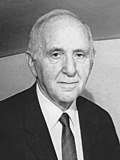
 United States of America
Explanation
Economy means the way people make and trade things and money. Mr. Kuznets collected numbers over many years to find out how much goods and money countries produce. Just like a tree grows taller each year, he watched to see whether a country becomes richer over time. He also discovered that when an economy grows very fast, wealth is not always shared equally. For example, when more factories are built, jobs increase but the gap between rich and poor can widen. Kuznets’ great achievement was to prove these changes with careful numbers. Thanks to his work, governments and teachers can now use data to make better plans for a country’s future.
Related Keywords
national income accounting
National income accounting is the statistical system that records all income and expenditure generated by a nation within a given period. It produces measures such as GDP, GNP and personal disposable income. Kuznets organized scattered governmental, corporate and tax records to create its modern foundation. Reliable national accounts are indispensable for judging business cycles and designing fiscal policy. Many concepts in today’s UN System of National Accounts evolved directly from his pioneering work.
Kuznets curve
The Kuznets curve is a U-shaped hypothesis stating that income inequality widens in the early stages of development but narrows after a certain income level is reached. Kuznets demonstrated the pattern empirically using historical data from industrialised and developing nations. As urbanisation and improved education raise low-income wages, inequality supposedly declines. The idea has inspired extensions such as the “environmental Kuznets curve,” relating pollution to income. Yet modern evidence of rising inequality in rich countries has revived debate about its validity.
economic growth
Economic growth refers to the increase over time in a country’s output and income. Measuring it requires statistics such as real GDP and income per capita, whose long-run series Kuznets painstakingly built. Major drivers include technological progress, capital accumulation and labor expansion. Sustained growth raises living standards but can also heighten resource use and environmental stress. Designing policies for high-quality, inclusive growth remains a central challenge in economics.
structural change
Structural change describes the long-term shift in an economy’s main sectors from agriculture to manufacturing and eventually to services. Kuznets used data to show that such transitions raise labor productivity and average incomes. Structural change is accompanied by urbanisation, migration and evolving skill requirements. As industrial composition shifts, political institutions and culture are often affected as well. Development policy in low-income countries centers on how to accelerate and manage this mechanism.
empirical economics
Empirical economics is the branch that tests economic theories and informs policy through real-world data. Kuznets pioneered the practice by organizing vast statistical records and bridging theory with observation. Regression models, causal inference and other econometric tools are essential to empirical work. Attention to data quality and measurement error is likewise crucial; Kuznets was meticulous about aggregation procedures and deflator choice. Modern large-scale analyses in R or Python follow the same empirical spirit.
income distribution
Income distribution describes how the income generated by an economy is shared among individuals or households. Rising average income does not guarantee fairness if the distribution remains unequal. Kuznets popularized the use of the Lorenz curve and Gini coefficient, providing quantitative measures of inequality. These tools allow comparisons of inequality across time and countries. Tax and social-security design today still relies heavily on income-distribution statistics.
development economics
Development economics studies how low-income countries can overcome poverty and achieve sustained growth and welfare improvements. Kuznets’ data provided a compass for understanding the structural changes such nations must undergo. It offers empirical grounding for policy priorities such as industrialisation, education investment and higher savings rates. His inequality measures are likewise essential when designing redistributive policies. Current debates around the SDGs build directly upon this knowledge.
economic statistics
Economic statistics are the datasets that capture prices, employment, production, trade and other aspects of economic activity. Reliable statistics are a prerequisite for business-cycle analysis and monetary policy. Kuznets standardised and extended these statistics, highlighting the importance of comparability over time and across countries. Producing them involves survey design, sampling and seasonal adjustment among other techniques. Even in today’s digital era, maintaining trustworthy economic statistics remains a cornerstone of policymaking.