1977 Nobel Memorial Prize in Economic Sciences
Reason for Award
for their path-breaking contribution to the theory of international trade and international capital movements
Laureates
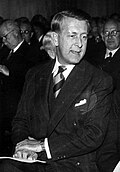
 Sweden
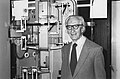
 United Kingdom of Great Britain and Northern Ireland
Explanation
Countries help each other by exchanging things like apples and cars. One nation may be good at growing apples, while another is good at making cars. If they swap wisely, everyone ends up with more apples and cars to enjoy. Mr. Ohlin and Mr. Meade created ideas that show how such exchanges can work well. They also explained what happens when money itself moves across borders, helping us understand how foreign products reach us and how earnings sent abroad travel safely.
Related Keywords
Heckscher-Ohlin model
1. The Heckscher-Ohlin model is a general-equilibrium theory of international trade. 2. It states that differences in factor endowments—labour, capital, land—determine a country’s export and import patterns. 3. Although expressed in a simple two-country, two-good, two-factor form, it can be extended to many-country, many-good cases. 4. The model generates results such as the Stolper-Samuelson theorem and the factor-price-equalisation theorem. 5. Empirical work links it to the Leontief paradox and gravity estimations, making it relevant for policy analysis.
Comparative advantage
1. Comparative advantage is the fundamental principle of trade introduced by David Ricardo. 2. A country gains by exporting goods for which its opportunity cost is relatively low, even if it is absolutely inefficient. 3. Ohlin’s work shows that such relative efficiency can be systematically explained by factor endowments. 4. The principle underlies modern free-trade agreements and multilateral negotiations. 5. Even in an era of technological change and global value chains, comparative advantage remains a useful guide.
Factor endowment
1. A factor endowment is the quantity and quality of resources—labour, capital, land, skills—that a country possesses. 2. Its size and composition determine production-cost structures and hence export and import patterns. 3. Endowments change over time with development stages and demographics. 4. Fragmentation of endowments in global supply chains makes them crucial in offshoring analysis. 5. Measuring factor endowments also informs cross-country statistics and environmental-constraint assessments.
Factor-price-equalisation theorem
1. The factor-price-equalisation theorem states that when commodity prices equalise through trade, wages and returns on capital may also converge internationally. 2. It relies on assumptions of perfect competition and identical technologies in the HOS model. 3. Although full equalisation is rare due to trade costs and technological differences, the theorem provides a basis for convergence analysis. 4. It serves as a benchmark in studies comparing international wage gaps and capital returns. 5. The theorem is also cited when explaining incentives for labour migration and foreign direct investment.
International capital movements
1. International capital movements refer to cross-border lending, borrowing and investment. 2. Meade theorised how interest-rate differentials and exchange-rate regimes drive capital inflows and outflows. 3. Forms include foreign direct investment, portfolio flows and bank loans, each with distinct risk-return profiles. 4. Capital flows interact closely with current-account surpluses and deficits, making them central to macro-policy debates. 5. After the global financial crisis, macro-prudential and capital-control discussions intensified, with Meade’s framework gaining renewed attention.
Balance of payments
1. The balance of payments is the systematic record of a nation’s external economic transactions. 2. It is broadly divided into the current, capital and financial accounts. 3. Meade derived conditions for optimally combining exchange-rate, fiscal and monetary policies to adjust imbalances. 4. Large trade gaps or capital surges are corrected through exchange-rate shifts and changes in foreign-reserve holdings. 5. Balance-of-payments data underpin IMF agreements, SDR allocations and rising debates on economic security.
Terms of trade
1. Terms of trade measure the ratio of export prices to import prices. 2. An improvement means a country can obtain more imports for a given volume of exports, raising welfare. 3. Ohlin theoretically linked changes in factor endowments to shifts in terms of trade. 4. The impact of resource booms and exchange-rate swings on terms of trade is a key topic in development studies. 5. Long-run trends influence industrialisation strategies and primary-commodity dependence in emerging economies.
Trade policy
1. Trade policy refers to government interventions—tariffs, quotas, subsidies—that influence trade volumes and prices. 2. Meade, from a welfare-economics view, formulated optimal tariffs and minimally distortive subsidy schemes. 3. Trade policy affects domestic income distribution and employment, making it central to political-economy debates. 4. The WTO and regional agreements codify rules to balance protectionism with liberalisation. 5. New instruments such as carbon border adjustments are assessed within the theoretical framework pioneered by Ohlin and Meade.