1992 Nobel Memorial Prize in Economic Sciences
Reason for Award
for having extended the domain of microeconomic analysis to a wide range of human behaviour and interaction, including non-market behaviour
Laureates
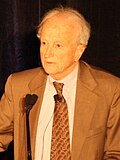
 United States of America
Explanation
When you decide how to use your pocket money, you are already choosing and comparing. Gary Becker took this idea of choosing and applied it to things that do not involve money. For example, he treated the time spent going to school or helping at home as something we trade for other benefits. Thanks to him, we can now explain with numbers how long people stay in school or how families share chores. Even without hard math, he shows that imagining "what if" and comparing choices is important. Because of his work, economics feels closer to our everyday lives.
Related Keywords
microeconomics
Microeconomics studies the behavior of individual consumers and firms and investigates how prices and resource allocations are determined. Using concepts such as demand and supply, marginal utility, and marginal cost, it explains how optimal decisions are made. Becker’s contribution was revolutionary in that he extended microeconomic methods to non-market domains. He formulated family decisions, education choices, and criminal activity as micro-level optimization problems. As a result, the scope of economics expanded dramatically and stronger links with other social sciences were forged.
non-market behavior
Non-market behavior refers to human activities that occur without explicit prices or contracts. Examples include the division of household chores, volunteer work, and the choice of friends. Becker argued that these activities also involve opportunity costs and that people choose them to maximize utility. This viewpoint made it possible to model schooling years, marriage timing, and more with formal equations. Economic analysis of non-market behavior now plays an important role in evaluating public policy and social welfare.
human capital
Human capital is the idea that education, training, and health are assets that generate future benefits. Investing in these assets costs tuition, time, and effort, but it yields higher expected earnings as returns. Becker provided a method for calculating the internal rate of return on such investments, enabling cost-benefit analysis of education policies. Consequently, governments and firms began treating education as a crucial form of infrastructure investment. Human capital theory now stands at the core of labor and development economics.
economics of the family
The economics of the family treats the family as a decision-making unit and analyzes marriage, divorce, fertility, and household labor allocation with economic models. Becker specified household utility functions and constraints, using comparative statics to predict policy effects. This approach allows researchers to quantify how parental leave schemes or tax systems influence family behavior. It also provides a foundation for debates on gender equality and female labor force participation. The perspective is now indispensable in demographic economics and public policy analysis.
economics of crime
The economics of crime models offenders as rational agents who compare the expected benefits and costs of illegal activity. Becker combined arrest probability with the severity of fines or imprisonment to derive optimal sanction levels. Policymakers use this model to allocate police resources and design punishment schemes. Empirical studies also test how unemployment rates and education levels affect crime rates. Linking theory with data helps propose more effective and efficient crime-control strategies.
economics of discrimination
The economics of discrimination analyzes unjust disparities in labor and housing markets. Becker distinguished between taste-based and statistical discrimination, arguing that taste-based discrimination tends to disappear in competitive markets because it raises employers’ costs. However, when information asymmetries or market frictions persist, discrimination can continue. His framework is applied to wage gaps and hiring practices and is used to evaluate policy interventions. Contemporary research extends the model by incorporating behavioral factors and institutional contexts.
rational choice theory
Rational choice theory posits that individuals have consistent preferences and act to maximize utility subject to constraints. Becker’s work applied this assumption beyond markets and tested its explanatory power. Critics argue that the model overlooks emotions and biases, yet it remains useful for policy simulation and comparative analysis. Behavioral economics complements the theory by systematically explaining observed deviations. Ultimately, rational choice theory serves as a common language across social sciences and facilitates dialogue between theory and empirical work.