1993 Nobel Memorial Prize in Economic Sciences
Reason for Award
for having renewed research in economic history by applying economic theory and quantitative methods to explain economic and institutional change
Laureates
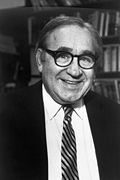
 United States of America

United States of America
Explanation
Economic history studies how people earned and spent money long ago. Mr. Fogel and Mr. North did more than read old stories; they collected numbers and used math to see how past economies worked. For example, they measured how much railroads really helped travelers and traders. They also checked with numbers how new laws changed merchants’ behavior. In this way they turned history into something close to a scientific experiment.
Related Keywords
economic history
Economic history analyzes past economic activity and institutional change over time. It studies money circulation, industrial structures, and trade networks using archival documents and statistics. After World War II more data became available, fostering quantitative work. Fogel and North embedded economic theory and metrics, increasing the field’s precision. Today it is crucial for policy evaluation and development economics.
cliometrics
Cliometrics applies econometrics to historical questions, testing hypotheses with regression analysis and optimization models. Proposed in the 1960s, it had Fogel as a key figure. It was groundbreaking in quantitatively revisiting issues like slavery and railroad impacts that had relied on qualitative debate. The approach now incorporates natural experiments and machine learning, growing interdisciplinarily. It is valued for enhancing reproducibility and falsifiability in historical research.
institutions
Institutions are the formal and informal rules, norms, and enforcement mechanisms shaping society. North argued they determine transaction costs and thus economic growth. Sound institutions protect property rights and enforce contracts, energizing markets. Weak institutions distort resource allocation and cause stagnation. Quantifying institutions and linking them to outcomes evolved into New Institutional Economics.
transaction costs
Transaction costs are the expenses of negotiating, monitoring, and searching for information when exchanging goods and services. North positioned the existence of states and firms as ways to economize on these costs. Sound institutions lower costs and expand market exchange. High-cost environments favor underground markets and self-sufficiency, hindering specialization. The concept is central in contract theory and governance studies.
counterfactual analysis
Counterfactual analysis asks what would have happened if event X had not occurred and compares it with reality to uncover causality. Fogel modeled the U.S. economy without railroads and overturned prevailing views. Counterfactuals sharpen causal inference and underpin natural-experiment and difference-in-differences designs. The method now spreads beyond economic history to climate and health studies. It is a key tool in policy evaluation.
path dependence
Path dependence describes how present choices are tightly constrained by past events or institutions. North explained institutional change as cumulative, letting historical accidents affect long-term outcomes. Colonial land systems influencing modern income inequality is a typical example. The concept highlights lock-in effects and the difficulty of policy reversal. It is widely used in studies of technology standards and evolutionary economics.
economic impact of railroads
Railroads were seen as the symbol of national progress in 19th-century America. Fogel used linear programming to quantify their transport-cost savings and found the GDP contribution modest. The need for objective evaluation of infrastructure investment became clear. While railroads fostered market integration, their cost-effectiveness had to be measured carefully. The study influences modern transport policy analysis.
new institutional economics
New Institutional Economics argues that institutions drive economic performance, theorizing around transaction costs and property-rights protection. North’s historical work is a pillar, merged with Coase’s and Williamson’s contract theory. Cross-country studies using legal origins or corruption indices are common. International organizations use the framework to quantify the impact of institutional reform. It provides a basis for re-evaluating market failures and government roles.
historical statistical data
Census and agricultural reports from the 19th–20th centuries have been digitized and underpin economic-history studies. Fogel and North sampled original returns to build their own datasets. Today large repositories like IPUMS and CLIO-INFRA enable highly reproducible research. Techniques for imputing missing data and harmonizing units have improved. The data are also used in machine-learning-based long-term forecasting and pattern discovery.
evidence-based policy making
Evidence-based policy making (EBPM) designs policies using solid data and analysis. Fogel and North showed that even historical events can be quantitatively assessed, spreading a culture of numerical verification. Randomized trials and administrative big data now enhance causal inference. EBPM objectively measures the impact of public investment and institutional reform, improving transparency. It is valued for strengthening the credibility of democratic decision-making.