1905 Nobel Peace Prize
Reason for Award
for her novel “Lay Down Your Arms!” and for her outstanding contribution to the peace movement
Laureates
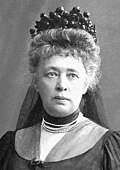
 Austro-Hungarian Empire
Explanation
Bertha von Suttner was a woman who told the world, “War is scary, so let’s stop it.” She wrote a story called “Lay Down Your Arms!” and asked everyone to put their weapons down and talk instead. In the story, families suffer because of battles, and readers learn why peace matters. Bertha didn’t just sell books; she spoke at meetings and wrote newspaper articles spreading her message. Her brave work was honored with the Nobel Peace Prize in 1905. Today, the idea that talking is better than fighting is popular thanks to people like Bertha.
Related Keywords
peace movement
An international anti-war and disarmament campaign that became increasingly organized in Europe and North America during the late 19th century. It involved churches, labour unions, women’s groups, and other actors who shaped public opinion through pamphlets, rallies, and parliamentary petitions. Bertha von Suttner was one of its most visible leaders, noted for integrating advocacy writing with direct lobbying. The movement influenced the Hague Peace Conferences and the creation of the Permanent Court of Arbitration, and it provided an ideological basis for the League of Nations after World War I. It is regarded as an early point in the genealogy of global civil society that today includes nuclear-disarmament and climate-justice campaigns.
“Lay Down Your Arms!”
Bertha von Suttner’s seminal 1889 novel. Written as the diary of Viennese aristocrat Martha, it chronicles how war takes the lives of her husbands and family, conveying the violence of conflict in an emotionally charged way. The book went through more than 60 editions and was translated into over 20 languages, becoming a bestseller. Although fictional, its depictions of diplomatic negotiations and military hospitals were based on meticulous research, lending the story strong realism. Literary scholars view it as a forerunner of socially engaged fiction, while communication studies cite it as a classic example of narrative-driven attitude change.
international arbitration
A mechanism for resolving interstate disputes through a neutral tribunal rather than warfare. Multiple arbitration treaties were signed in the late 19th century, culminating in the establishment of the Permanent Court of Arbitration at the Hague Peace Conference. Von Suttner advocated compulsory arbitration in her speeches and writings, cooperating with British and American peace societies to promote its legalization. Arbitration paved the way for the Permanent Court of International Justice and today’s International Court of Justice, and it influences modern investment and WTO dispute-settlement systems. It is valued as a core concept for achieving “security without force” in conjunction with disarmament.
anti-militarism
An ideology and movement that criticizes the primacy of military power and seeks to limit the influence of the military over politics and society. It emerged in late-19th-century Germany and France, with socialists and Christian pacifists at its core. Von Suttner’s novels and lectures provided an emotional and ethical counterweight to propaganda that glorified armies. Although it receded during World War I, the idea resurfaced in the Weimar Republic and French memorial movements, and it later informed Vietnam-era protests and climate-peace debates. Today anti-militarism appears in campaigns for defense-budget cuts and in arguments linking security with ecological sustainability.
disarmament
The reduction in quantity or capability of weapons and armed forces held by states. It became a major demand of the peace movement in response to late-19th-century naval arms races and was placed on the agenda of the Hague Peace Conferences. Von Suttner criticised armaments as both an economic waste and a humanitarian threat, arguing that disarmament could lower taxes and save lives simultaneously. The concept carried over to the Washington Naval Conference, the Geneva Disarmament Conference, and the Nuclear Non-Proliferation Treaty negotiations, remaining a central theme in international-security studies. Recent research linking climate change and military spending also applies the disarmament framework.
Nobel Peace Prize
An international prize awarded since 1901 based on Alfred Nobel’s will. It honours individuals or organizations that have made significant contributions to peace, and the Norwegian Nobel Committee in Oslo selects the laureates. Von Suttner won only five years after the prize’s inception and is notable as one of its earliest female recipients and as someone who influenced Nobel’s drafting of the will. The Peace Prize has since expanded its scope to nuclear disarmament, refugee relief, human-rights defence, and more, maintaining global attention. Although its impact is debated, the moral pressure and funding generated by the award have often produced tangible effects in international affairs.