1913 Nobel Peace Prize
Reason for Award
as a representative of the International Peace Bureau
Laureates
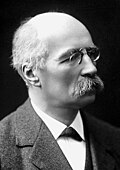
 Belgium
Explanation
Henri La Fontaine was a person who worked hard so that countries would not fight but talk and become friends. He was like the leader of a big club where people met to ask, “How can we avoid fights?” This club is called the International Peace Bureau. La Fontaine made many friends and showed that people can understand each other even if they come from different countries or look different. Thanks to his efforts, the idea of treasuring peace spread around the world.
Related Keywords
International Peace Bureau
Founded in 1891, the International Peace Bureau (IPB) is one of the world’s oldest peace NGOs and served as a bridge between governments and civil society. Its annual conferences debated proposals for arms reduction and arbitration treaties, and the proceedings constitute valuable primary sources on the peace movement. La Fontaine became its president in 1907 and expanded the network beyond Europe. The IPB itself won the Nobel Peace Prize in 1910, highlighting its sustained impact. Today it remains headquartered in Geneva, Switzerland, and continues campaigning on issues such as nuclear disarmament.
Peaceful Internationalism
Peaceful internationalism was an intellectual current from the late 19th to early 20th century that sought to build supranational cooperation while respecting state sovereignty. Through parliamentary diplomacy and citizen exchanges, La Fontaine tried to cultivate awareness of humanity’s common interests. He regarded law and morality, rather than military force, as the basis for conflict resolution and advocated permanent mechanisms within international organizations. The concept informed the League of Nations after World War I and, later, the United Nations. Contemporary international relations scholarship reassesses it as a root of modern multilateralism.
International Arbitration
International arbitration is a procedure in which disputes between states are submitted to a third-party body for peaceful resolution. Successful cases in the late 19th century, such as the Alabama Claims and the Algiers Bonds dispute, drew attention to the method. La Fontaine campaigned for arbitration treaties and advocated use of the Hague Permanent Court of Arbitration. He argued that arbitration, being non-violent and cost-effective, also served national interests. The concept survives today in institutions like the International Tribunal for the Law of the Sea and investment arbitration venues.
Inter-Parliamentary Union
Founded in 1889, the Inter-Parliamentary Union (IPU) is an international organization of legislators and a pioneer of parliamentary diplomacy. By enabling dialogue across national assemblies, it seeks common legislative goals and peaceful solutions. La Fontaine took part as a Belgian delegate and helped pass resolutions on disarmament. The IPU later served as a model when designing the parliamentary dimension of the League of Nations. Today over 140 national parliaments are members, addressing issues such as human rights and gender equality.
International Law
International law is the set of rules governing the rights and duties of states, derived from treaties, custom, and general principles. It expanded rapidly in the 19th century in response to colonial expansion and technological change. As a respected scholar, La Fontaine offered legal interpretations of peace and arbitration treaties and popularized the field through lectures and writings. His efforts contributed to codification movements and influenced later jurists such as James Brown Scott. International law remains indispensable for conflict resolution and human rights protection.
Bibliography of the International Peace Movement
Co-compiled by La Fontaine and Paul Otlet, the Bibliography of the International Peace Movement systematically organized books and articles on peace. By classifying a vast amount of information, it enabled researchers and activists to access sources rapidly, a groundbreaking achievement. The card-based method formed the prototype of the Universal Decimal Classification (UDC), contributing to information science. It fostered interdisciplinary peace studies and influenced collection policies of university libraries and international organizations. The bibliography remains a fundamental resource for scholars of early peace movements.
League of Nations
Established in 1919 after World War I, the League of Nations was the first universal intergovernmental organization dedicated to collective security. La Fontaine’s idea of peaceful internationalism contributed to its conceptual design, influencing arbitration clauses and institutional architecture. Auxiliary bodies such as the International Labour Organization (ILO) and the Permanent Court of International Justice (PCIJ) experimented with multilateral cooperation. Although dissolved after World War II, the League’s experience fed directly into the United Nations. It remains a key reference point in studies of international organizations.
Esperanto Movement
The Esperanto movement promotes the use of a constructed international language to overcome linguistic barriers. La Fontaine supported the idea early on and proposed its use at peace conferences. He believed that a shared language would reduce misunderstandings and help prevent conflicts. Esperanto became a symbol of citizen diplomacy and was adopted by many peace organizations. The language still enjoys a dedicated community as a universal communication tool.
Nobel Peace Prize
Established in 1901 under Alfred Nobel’s will, the Nobel Peace Prize is awarded annually by the Norwegian Nobel Committee to individuals or organizations contributing to disarmament and international fraternity. La Fontaine received it solely in 1913 for his work with the International Peace Bureau. The award drew global attention, legitimizing and highlighting the social importance of the peace movement. Today, laureates’ activities remain influential indicators in international politics.
Permanent Court of Arbitration
Established by the Hague Peace Conference in 1900, the Permanent Court of Arbitration (PCA) deals with disputes between states as well as investor-state cases. La Fontaine analyzed legal and diplomatic barriers to its use and publicized actual arbitration cases to enhance its credibility. He was praised for proposing mechanisms that states could readily accept as alternatives to armed conflict. The PCA continues to operate, addressing issues such as maritime boundaries and environmental disputes. It marks an important milestone in the evolution of the international judicial system.