1919 Nobel Peace Prize
Reason for Award
for his role in founding the League of Nations
Laureates
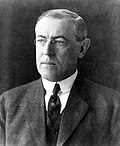
 United States of America
Explanation
When World War I ended, people everywhere wanted to make sure such a big war would never happen again. Woodrow Wilson, who was the President of the United States, thought of creating a special club where countries could meet and talk things over instead of fighting. This club was called the League of Nations. It is like when a teacher steps in to help classmates solve a disagreement by talking together. Wilson explained his idea to many countries and won their support. In 1920 the club really began. Because of the League, nations had a place to discuss problems for the first time. Wilson’s hard work for peace was honored with the Nobel Peace Prize.
Related Keywords
League of Nations
The League of Nations was the world’s first permanent international organization, established after World War I to replace force with dialogue in settling disputes. It comprised an Assembly, a Council, and a Secretariat, and experimented with collective security using economic-sanctions provisions. Through specialized bodies such as the International Labour Organization and the Permanent Court of International Justice, it engaged in economic and social issues as well. The League’s prestige declined when major powers—among them the United States, the Soviet Union, Germany, and Japan—failed to join or later withdrew, and it ultimately could not prevent World War II. Nevertheless, its institutional design and operational experience directly shaped the founding of the United Nations and is regarded as a forerunner of modern multilateral cooperation.
Fourteen Points
The Fourteen Points, announced by Wilson to Congress in January 1918, laid out war-ending principles that included open diplomacy, freedom of navigation, tariff reductions, and arms limitations. The document clarified the notion of national self-determination and influenced the restructuring of the Austro-Hungarian and Ottoman Empires. Point 14 called for the creation of a “general association of nations,” providing the immediate blueprint for the League of Nations. These principles served as the negotiation baseline at the Paris Peace Conference and steered the post-war order in a liberal direction. Although often criticized as idealistic, the Points remain a conceptual foundation for contemporary human-rights norms and international organization.
collective security
Collective security is an international security arrangement in which an attack on one member is treated as an attack on all, prompting collective response. Articles 10 and 16 of the League’s Covenant first codified this as a legal obligation, envisaging economic sanctions and, if necessary, military action against aggressors. Conceptually it seeks to strengthen deterrence among states, but its effectiveness is limited by the degree of cooperation among major powers. After World War II, the concept was redesigned in the UN Charter’s Chapter VII, concentrating enforcement authority in the Security Council. Scholarly analyses focus on collective-action dilemmas and power-distribution asymmetry as determinants of institutional performance.
Paris Peace Conference
The Paris Peace Conference of 1919 was the international forum that drafted the treaties ending World War I. Key outcomes included the Treaty of Versailles, the Treaty of Saint-Germain, and the Treaty of Trianon, imposing territorial losses and reparations on the Central Powers. The Covenant of the League of Nations was also drafted there, with Wilson and other leaders negotiating its details. Contentious debates over colonial issues and self-determination at the conference influenced later conflicts in Asia and the Middle East. In International Relations scholarship it stands as a classic case illustrating the interplay between multilateral negotiation and great-power politics.
internationalism
Internationalism is an outlook and policy orientation that stresses cooperation beyond national borders and the pursuit of common interests. Wilson’s diplomacy, sometimes labeled moral internationalism, linked democracy and free trade to the conditions for peace. In the early twentieth century it advanced multilateralism and spurred the development of international organizations and law, often in tension with domestic isolationism. During the Cold War it was reinterpreted as the liberal international order and continues to influence governance debates in the age of globalization. Critics point to pitfalls such as imposing great-power values or masking power politics.