1922 Nobel Peace Prize
Reason for Award
for his leading role in the repatriation of prisoners of war and the relief of famine refugees
Laureates
 Norway
Explanation
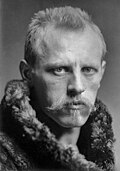
Fridtjof Nansen was an explorer and scholar from Norway who chose to help people in trouble. After World War I, many soldiers and civilians were stuck in foreign lands. Nansen organized trains and ships so they could return home. When a huge famine struck Russia, he gathered food from many countries and sent it to the hungry. He also created the special 'Nansen Passport' so refugees without a country could travel safely. For these actions he won the Nobel Peace Prize. His story teaches us that helping others, even far away, is very important.
Related Keywords
Nansen Passport
The Nansen Passport was an identity certificate issued to refugees and stateless persons who could not obtain a national passport. Institutionalized by a 1922 multilateral agreement, it was recognized by more than 50 states. Holders were able to cross borders, secure residence permits, and access work and education. The document served as the direct model for the 'Travel Document' defined in the 1951 Refugee Convention. It reframed refugee assistance as a cooperative international regime rather than an intrusion on state sovereignty.
Repatriation of prisoners of war
After World War I, hundreds of thousands of POWs remained stranded in foreign countries. Nansen designed rail-and-sea transport chains and coordinated funding between the Red Cross and national governments. Between 1920 and 1922 roughly 430 000 prisoners were returned home. The operation is regarded as the first continent-wide humanitarian transport led by an intergovernmental body. Rapid repatriation eased post-war political tensions and enabled family reunification on a massive scale.
League of Nations High Commissioner for Refugees
Created in 1921, the office’s first holder was Nansen himself. The High Commissioner was responsible for data collection, fundraising and legal protection for refugees. Headquartered in Geneva, the bureau acted as a hub linking governments and NGOs. Under Nansen, standardized procedures for refugee assistance were codified, giving the international community a common relief template. The institutional model was later adopted by UNHCR after World War II.
Russian Famine (1921–1922)
Civil war and drought combined to create a food crisis that threatened an estimated 30 million people in Russia. Nansen appealed globally and organized large shipments of grain, dairy products and medicines. Supplies traveled by rail and along the Volga River to reach the interior provinces. The logistics and funding techniques developed here became prototypes for later international relief missions. Approximately seven million lives were believed to have been saved by the operation.
Humanitarianism
Humanitarianism is the idea and practice of helping people in distress regardless of nationality or religion. Nansen redirected the courage and organizational skills from his polar expeditions toward this principle. His work introduced a human-security perspective into international politics, giving priority to people rather than state interests. Today most NGOs and intergovernmental agencies cite humanitarianism as a core value. Nansen’s Nobel Prize symbolized the global acceptance of this ethic.
Statelessness
Statelessness describes a condition in which an individual is not legally protected by any state. Wars and shifting borders after 1918 produced large numbers of such people who faced restrictions on travel and work. The Nansen Passport was an early remedy for this dilemma. Today an estimated four million people remain stateless, and the UN Sustainable Development Goals call for universal legal identity. The issue continues to challenge the international community.
International relief
International relief refers to cooperative efforts by multiple countries and organizations to aid victims of disasters and conflicts. Nansen’s famine program provided an early model linking governments, the Red Cross and charitable groups. It foreshadowed later multinational operations such as the Berlin Airlift and assistance to Bangladeshi refugees. Standardization of funding, logistics and information sharing emerged, forming a distinct professional field of humanitarian aid. Nansen’s work had a decisive impact on this evolution.
International solidarity
International solidarity refers to the spirit and practice of cooperation across borders. Many countries responded to Nansen’s appeals by supplying funds and goods. Without this solidarity, neither the POW repatriation nor the famine relief would have succeeded. The same principle underlies today’s responses to climate change and pandemics. Nansen’s achievements demonstrate that solidarity is fundamental to building peace.