1927 Nobel Peace Prize
Reason for Award
for their contribution to Franco-German reconciliation and the nurturing of public opinion favouring peaceful international cooperation
Laureates
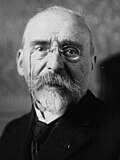
 France
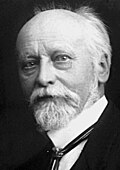
 German Reich
Explanation
A long time ago France and Germany had a big fight called World War I. Mr. Buisson and Mr. Quidde told everyone, “Let’s stop fighting and be friends.” They wrote books and held meetings to explain why talking and listening are important. It is like telling classmates who argued to sit down and speak kindly. Little by little, people’s hearts softened, and France and Germany found a way to shake hands again.
Related Keywords
Franco-German reconciliation
The Franco-Prussian War of 1871 and World War I left deep scars between the two nations. Buisson and Quidde organised cross-border debates and cultural exchanges, offering a ‘grass-roots prescription’ for detoxifying hatred. Their work facilitated the Locarno Treaties and the Stresemann-Briand détente, often cited as a pre-history of the European Union. Reconciliation was presented not as a sentiment but as a sustained process of adjusting institutions dealing with reparations, security and education. The concept influenced later European integration and the creation of bodies such as the ECHR.
Pacifism
Pacifism is the conviction that problems should be solved by dialogue, not violence. Buisson emphasised non-violent pedagogy in schools, while Quidde used historical studies to illustrate the dangers of power unchecked. They advocated ‘structural peace’ achieved through legal frameworks and opinion building, rather than purely emotional anti-war appeals. For the generation scarred by World War I, pacifism was both a moral stance and a strategy for national survival. Modern nuclear disarmament campaigns and the evolution of international humanitarian law carry this legacy.
International cooperation
International cooperation is the arrangement by which states share resources and information to reach common goals. In the 1920s the League of Nations and the Permanent Court of International Justice offered new venues for legal settlement of disputes. Buisson and Quidde served as civil-society partners to these bodies, providing concrete cooperation models in education and culture. Their work established a two-level structure—“governments plus civil society”—that prefigures today’s UN-NGO consultative status. Consequently, the idea that economic recovery and cultural exchange underpin peace became widespread.
Peace education
Peace education is the pedagogical practice aimed at understanding the roots of violence and learning non-violent conflict resolution skills. Buisson removed enemy-denigrating expressions from textbooks and encouraged a comparative historical approach to foster multiple perspectives. He also introduced pen-pal programmes that allowed children to experience intercultural understanding first-hand. These methods anticipate today’s UNESCO Associated Schools and the IB curriculum. Peace education is thus not only ‘anti-war teaching’ but also citizenship education that enables democratic participation.
Weimar Republic
Established by the 1919 Weimar Constitution, the German republic adopted free speech and proportional representation but suffered from hyper-inflation and political violence. Quidde became a Reichstag deputy under this regime, condemning extremist violence and advocating the preservation of democracy. The fragility of Weimar shows how swiftly a system can collapse when the balance between international support and domestic opinion breaks down. His work highlights the bulwark role that civil society can play while institutions remain immature. Lessons from Weimar informed later policies during Germany’s 20th-century reunification.
League of Nations
The League of Nations, founded after World War I, was the first permanent international body based on collective security. Members were obliged to submit disputes to the League Council, yet economic and military sanctions proved limited. Buisson and Quidde worked in the League’s ‘Intellectual Cooperation Organisation,’ showing how cultural programmes could complement political machinery with soft power. Though the League failed in many respects, it was groundbreaking in institutionalising public participation in international issues via civil society. The experience directly fed into the post-World War II creation of the United Nations.