1935 Nobel Peace Prize
Reason for Award
in recognition of his pacifist journalistic activities
Laureates
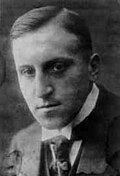
 Greater German Reich
Explanation
Carl von Ossietzky was a German newspaper journalist. He believed strongly that war hurts people and must be stopped. So he wrote clear articles in magazines and papers explaining the dangers of war. He even exposed how the government was secretly building more weapons. Because of this bravery he was arrested and put in prison. People around the world honored his courage by giving him the Nobel Peace Prize.
Related Keywords
pacifism
Pacifism is an ideology and movement that in principle rejects war and violence, seeking peaceful means of conflict resolution. After experiencing World War I, Ossietzky adopted a pronounced pacifist stance and used articles and lectures to stress the inefficiency and inhumanity of armed force. His activism was closely linked to anti-war demonstrations and international peace congresses in Weimar Germany. In peace studies and international relations, pacifism is often framed as a counter-concept to realism. The doctrine continues to inform today’s nuclear disarmament campaigns and the theory of conscientious objection.
freedom of the press
Freedom of the press is the right to gather and disseminate information independent of state or political power. Ossietzky’s arrest became a textbook example of how fragile that freedom is under authoritarian regimes. Article 19 of the ICCPR and Article 19 of the Universal Declaration of Human Rights enshrine press freedom as a fundamental right. Even today journalists face repression worldwide, tracked by Reporters Without Borders’ index. In the era of digital surveillance, encryption and anonymous whistle-blowing platforms have emerged as new tools to safeguard this liberty.
Nazi Germany
Nazi Germany was the totalitarian state ruled by Adolf Hitler’s National Socialist German Workers’ Party from 1933 to 1945, characterized by censorship, persecution of Jews, and aggressive rearmament. Ossietzky was labelled an "enemy of the state" under this regime and sent to a concentration camp. The Nazis condemned his Nobel Prize and issued domestic decrees forbidding acceptance. This reaction provoked international criticism and further exposed the regime’s repressive nature. The episode illustrates the clash between totalitarian governance and global human-rights norms.
disarmament
Disarmament refers to reducing or eliminating a nation’s weapons and military forces. The Treaty of Versailles imposed strict limits on German armaments, yet the Nazi regime secretly rearmed. Ossietzky exposed this clandestine build-up and appealed to the League of Nations and public opinion to enforce disarmament. Disarmament remains a core tool of international security, echoed in modern agreements such as the Treaty on the Prohibition of Nuclear Weapons. Establishing transparency and verification mechanisms is considered essential for sustainable disarmament.
prisoner of conscience
A prisoner of conscience is someone detained for beliefs or expression without having advocated violence. Although popularized by Amnesty International, Ossietzky is considered an early exemplar. His detention triggered worldwide protests and foreshadowed operational models for later human-rights NGOs. Campaigns to free prisoners of conscience continue globally today. The concept is also used in academic research as a metric of political repression.
League of Nations
Created after World War I, the League of Nations was an international peace organization aiming at collective security and disarmament. Ossietzky raised the rearmament issue before its Disarmament Commission, urging treaty compliance. Although the League ultimately failed to prevent World War II, it served as a testing ground for international cooperation. It is regarded as a predecessor of the United Nations and today’s Geneva-based disarmament forums. League documents remain vital primary sources for studying interwar diplomacy and public opinion.
Nobel Prize reserve statute
Under Nobel Foundation statutes, if no suitable laureate is decided in a given year, the prize may be reserved until the following year. The 1935 Peace Prize used this clause and was announced in 1936, naming Ossietzky as sole laureate. Though rare, the reserve mechanism offers flexibility to account for political circumstances and evaluative maturity. It allowed the Nobel Committee to maintain independence while avoiding immediate political pressure. The statute underscores that the prize is not merely annual routine but a decision with historical weight.