1952 Nobel Peace Prize
Reason for Award
for his altruism, reverence for life, and tireless humanitarian work as a surgeon and physician in Lambaréné, which helped make the idea of brotherhood between men and nations a living one
Laureates
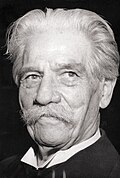
 West Germany
Explanation
Albert Schweitzer built a hospital in a town called Lambaréné in Africa and helped many people. He treated injured and sick patients all day without resting. He also taught that we should treasure every living thing. A doctor who came from far away cared for each person he met, and this sent a message of friendship to the whole world.
Related Keywords
Reverence for life
1. This core idea articulated by Schweitzer demands respect for all living beings, not only humans but also animals and plants. 2. It was presented as a universal value that transcends religious or cultural boundaries beyond traditional Christian humanitarianism. 3. The concept served as a counter-proposal to the mechanistic and utilitarian worldview emerging at the time. 4. It influenced diverse fields such as the international peace movement, animal ethics, and environmental ethics. 5. The principle aligns closely with the modern SDG pledge to “leave no one behind.”
Lambaréné Hospital
1. Founded in 1913 in Gabon, Equatorial Africa, by Schweitzer. 2. It offered multiple departments—general surgery, obstetrics, and tropical-disease treatment—providing care free of charge or at very low cost. 3. Training local staff and aiming for a sustainable health system were distinguishing features. 4. Expansion was financed largely through charity concerts held across Europe. 5. Today it survives as the “Albert Schweitzer Hospital,” continuing regional care and research.
Medical missionary
1. Refers to overseas practitioners who provide medical care grounded in religious belief or humanitarian ideals. 2. Activities intensified in Asia and Africa from the late 19th to early 20th centuries. 3. Schweitzer identified himself as both “missionary” and “scientific physician,” integrating religion with medicine. 4. Although linked to colonial dynamics, medical missionaries contributed to the modernization of local health systems. 5. In modern times the tradition continues in a secular form through international NGO medical volunteers.
Peace movement
1. A broad social movement that rejects war and violence, proposing non-military solutions to international conflicts. 2. After World War I, citizen-led actions expanded through the League of Nations and peace congresses. 3. Schweitzer’s lectures and writings reinforced the idea of “ethical peace,” influencing networks of clergy and intellectuals. 4. His thought provided a foundation for later campaigns on nuclear disarmament and civil rights. 5. The movement’s legacy continues in climate-justice activism and other efforts that seek change through ethical and cultural dialogue rather than force.
Anti-nuclear activism
1. A movement of citizens, scholars, and politicians opposing the development, deployment, or use of nuclear weapons. 2. It intensified worldwide during the 1950s as hydrogen-bomb testing expanded. 3. Schweitzer’s 1957 “radio appeal” against nuclear tests drew global attention and galvanized public opinion. 4. His influence is credited with shaping the climate that led to the Pugwash Conferences and the Partial Test Ban Treaty. 5. Today groups such as ICAN continue to pursue abolition on humanitarian grounds, carrying forward his legacy.