1953 Nobel Peace Prize
Reason for Award
for proposing and supervising the Marshall Plan for the economic recovery of Europe
Laureates
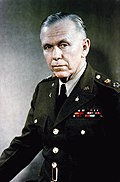
 United States of America
Explanation
After World War II, many European countries had ruined cities and little food or money. George Marshall from the United States said, “Let’s help each other,” and created a plan to send food, machines, and money. This plan is called the “Marshall Plan.” Because of it, Europe could rebuild and people’s lives slowly improved. Marshall received the Nobel Peace Prize for this great help.
Related Keywords
Marshall Plan
Officially the European Recovery Program (ERP), the Marshall Plan was a U.S.-led economic aid scheme from 1948 to 1952. It delivered 13.1 billion dollars to 17 countries, supplying food, raw materials, and machinery while encouraging institutional reforms. Assistance combined grants and low-interest loans, and recipients submitted utilization programs through the OEEC. The plan restored production and trade, curbed post-war inflation and unemployment, and strengthened Western political cohesion, shaping the emerging Cold War order. It remains a benchmark case of “peace-building through development” in contemporary scholarship.
European recovery
European recovery denotes the swift rebuilding of infrastructure and industrial capacity shattered by World War II. Public works—roads, railways, power plants—were prioritized and became engines of growth. Because reconstruction relied on external resources and know-how, the Marshall Plan acted as a catalyst. As recovery advanced, trade liberalization and currency stabilization followed, facilitating integration of Allied occupation zones and laying the groundwork for West Germany’s Wirtschaftswunder. The success of recovery heightened aspirations for European integration, paving the way for the EC and eventually the EU.
economic aid
Economic aid is the transfer of funds, goods, and know-how between states to support development, reconstruction, or welfare improvement. Post-war programs combined humanitarian and geopolitical aims, with the Marshall Plan emblematic. Aid can take the form of grants, concessional loans, or technical missions, often with policy conditions attached. When well-designed it boosts output and stabilizes societies, yet poor governance may foster dependency. Multilateral and bilateral agencies—USAID, JICA, etc.—are key actors, and such aid is deemed essential for achieving the SDGs.
OEEC
The Organization for European Economic Cooperation, founded in 1948 to administer Marshall Plan funds and foster cooperation among recipients. Members coordinated resource allocation, trade liberalization, and payment systems, deepening intra-European economic links. Through currency convertibility schemes and the European Payments Union, the OEEC promoted multilateral trade. In 1961 it was reconstituted as the OECD, expanding beyond Europe and focusing on policy coordination and statistical research. The OEEC era laid groundwork for European integration and modern economic governance.
Truman Doctrine
A 1947 foreign policy announced by U.S. President Harry S. Truman, pledging support to Greece and Turkey to contain communist expansion. The Marshall Plan served as a broader, economically focused complement to this doctrine. Seen as the inception of the containment strategy, the doctrine influenced NATO’s creation and U.S. aid programs in Asia. Throughout the Cold War it remained a guiding framework for American engagement abroad.
Cold War
The period of political, military, and economic rivalry between the U.S.-led West and the Soviet-led East after World War II. While avoiding direct great-power war, the blocs competed via diplomacy, espionage, propaganda, and proxy conflicts. In Western Europe, the Marshall Plan bolstered a capitalist economic sphere; the East responded with the COMECON bloc. The Cold War ended with the Soviet Union’s dissolution in 1991, yet its legacy lives on in nuclear deterrence doctrines and alliance structures.
containment policy
A U.S. strategy, articulated by George F. Kennan, aimed at preventing Soviet expansion. It mobilized a mix of military alliances (NATO), economic aid (Marshall Plan), and information campaigns. Containment assumed a protracted struggle that would expose internal weaknesses of the USSR. In Asia it manifested in support for South Korea and Taiwan and later in the Vietnam War. Variants of the concept reappear in contemporary counter-terror and China-related strategies.
Atlantic Alliance
A military-political framework centered on NATO, linking Western European nations with North America. Economic interdependence fostered by the Marshall Plan facilitated its formation. Under a collective-defense clause, an attack on one member is considered an attack on all. The alliance deterred the Soviet Union during the Cold War and remains a cornerstone of European security. Cooperation now extends to energy security and cyber defense.