1958 Nobel Peace Prize
Reason for Award
for his efforts to help post-World War II refugees in Europe leave their camps and return to a life of freedom and dignity
Laureates
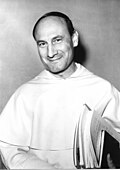
 Belgium
Explanation
After World War II, many people lost their homes and became refugees. Father Dominique Pire decided to help those who were suffering. He collected food and clothes and prepared warm places to live. He also helped refugees find jobs in new towns. Because of his work, many families could leave the camps and start normal lives again. These kind actions were recognized with the Nobel Peace Prize.
Related Keywords
refugee
“Refugee” refers to people forced to leave their home country because of persecution, war or violence. They often lose legal protection and face obstacles accessing basic services. International law defines their rights in the 1951 Refugee Convention. Dominique Pire’s work is regarded as a pioneering attempt to safeguard refugees’ dignity and self-reliance. With almost 100 million refugees worldwide today, understanding this historical background remains crucial.
refugee camp
A refugee camp is a temporary settlement designed to host displaced persons. While it allows centralised distribution of food and medical care, prolonged stay leads to poor sanitation and social isolation. Post-war European camps often consisted of barracks and tents that became obstacles to rebuilding lives. Father Pire made “getting out of camps” a core objective and promoted transition to permanent housing. Recent studies also show that long-term camp residence harms refugees’ mental health.
humanitarian aid
Humanitarian aid refers to assistance aimed at saving lives and alleviating suffering. It is carried out under the principles of neutrality, impartiality and independence during conflict or disasters. Pire’s work adopted a comprehensive approach that included education and job support in addition to food and medicine. This can be seen as an early example of the “nexus” connecting humanitarian and development aid. Many NGOs today implement similar integrated models to achieve sustainable recovery.
refugee resettlement
Refugee resettlement is a scheme in which a third country admits refugees and offers them permanent residence. In post-war Europe, labour-short countries promoted resettlement by integrating refugees into the workforce. Pire’s “European Villages” were experimental models to facilitate social integration after resettlement. The programme included language classes, vocational training and the creation of self-governing councils. Today the UNHCR resettlement framework likewise emphasises integration support after arrival.
UNHCR
The UNHCR, created in 1950, is the UN agency responsible for refugee protection and durable solutions. It was initially set up for three years but has been extended as displacement became protracted. Father Pire’s field experience influenced UNHCR frameworks on resettlement and self-reliance. UNHCR monitors implementation of the Refugee Convention while providing emergency and legal assistance. By 2022 its persons of concern exceeded 100 million, making its role ever more critical.
European refugee crisis (post-war)
After World War II, Europe experienced unprecedented population movements due to border changes and forced relocations. Around 11 million displaced persons were confined to camps across the continent. Rapid resolution of this crisis was vital for economic recovery and political stability. Father Pire’s efforts showed that civil society could contribute effectively to such challenges. His experience is often cited when designing support models for later crises, from the Balkans to Syria.
Dominican Order
The Dominican Order, founded in 1216, is a Catholic religious order stressing education and preaching. Father Dominique Pire belonged to this order and acted under its motto of “searching for truth and practicing charity.” The order’s international network proved invaluable for procuring aid supplies and dispatching volunteers. Its theological framework emphasised “human dignity,” providing the ethical basis for Pire’s programmes. The Dominicans continue to engage in education, medical care and human-rights work worldwide.
peacebuilding
Peacebuilding refers to creating institutions and social conditions that prevent conflict relapse and secure lasting peace. Tools include governance reform, economic recovery, human-rights promotion and social reconciliation. Pire’s refugee aid removed potential instability by facilitating social integration and dignity, thus functioning as a form of peacebuilding. His case is often studied as a grassroots peacebuilding initiative led by a non-state actor. Contemporary peacebuilding theory recognises that solving refugee issues is key to post-conflict recovery.