1964 Nobel Peace Prize
Reason for Award
for his non-violent struggle to end racial prejudice in the United States
Laureates
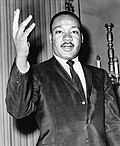
 United States of America
Explanation
Martin Luther King Jr. lived in a time when schools and buses were separated just because of skin color. He asked for fairness without using fists or weapons. People marched together, sang songs, and sat peacefully in places where they were told to leave. In his famous speech “I Have a Dream,” he spoke of a future where everyone gets along. His gentle way spread around the world and showed how to fix problems without hurting anyone. That is why he received the Nobel Peace Prize. We can learn from him to talk things out when we face problems.
Related Keywords
non-violent resistance
A mode of contesting power without physical violence. It includes boycotts, sit-ins, and marches. By claiming ethical superiority, it undermines the opponent’s legitimacy. King adapted Gandhian methods to the American context. Today, it is a common tactic in pro-democracy and environmental movements.
Civil Rights Movement
A movement in the 1950s-60s demanding legal and social equality for African Americans. Actions ranged from the Little Rock school crisis to the Freedom Rides. Leaders like King and Rosa Parks became icons. It culminated in the Civil Rights Act and Voting Rights Act. The movement fundamentally redefined American democracy.
Birmingham campaign
A 1963 protest in Birmingham, Alabama. Police used fire hoses and dogs against demonstrators, many of them children, shocking national audiences. Business leaders agreed to desegregate public facilities after negotiations. The campaign is a classic case in media strategy studies. King’s “Letter from Birmingham Jail” was written during this action.
Civil Rights Act
A 1964 federal law banning discrimination in public accommodations and employment based on race, color, religion, sex, or national origin. It legally nullified Southern segregation. Title VII addressed employment discrimination and created the EEOC. Propelled by King’s movement and President Johnson’s political skill, it marks a watershed in U.S. legal history.
Voting Rights Act
Enacted in 1965, it banned literacy tests and poll taxes that hindered Black voting. The Justice Department could dispatch observers to monitor registration in problematic states. It included provisions against gerrymandering. The Act dramatically increased Black voter registration in the South. Some sections have recently been struck down, reigniting debate.
Montgomery Bus Boycott
A 381-day boycott triggered by Rosa Parks’ arrest in 1955, refusing bus rides in Montgomery, Alabama. Economic pressure combined with litigation ended bus segregation. It launched King’s national leadership. The boycott is analyzed as a successful example of long-term non-violent action. Comparative studies examine it alongside modern ride-sharing activism.
I Have a Dream
King’s 1963 speech during the March on Washington, delivered to 250,000 people at the Lincoln Memorial. It painted a vision of equality beyond race. The speech is noted for its rhythmic rhetoric and biblical references. It is one of the most quoted speeches in U.S. history. Its phrases permeate textbooks and pop culture.
Jim Crow laws
A system of racial segregation laws in the U.S. South from the late 19th century to the 1960s. It imposed voting restrictions, separate facilities, and interracial marriage bans. The Supreme Court’s Plessy v. Ferguson decision upheld it, later overturned by Brown v. Board. King’s movement aimed to dismantle these practices.
sit-in
A form of direct action where protesters remain in a public or private space and refuse to leave. The 1960 Greensboro sit-ins are iconic. Though non-violent, it disrupts operations to exert pressure. The tactic is applied in campus occupations and climate protests. King supported student sit-ins and coordinated strategies.
Southern Christian Leadership Conference (SCLC)
A civil rights organization founded in 1957. Based on Black churches, it promoted non-violent protest and community organizing. King served as its first president. Working with groups like SNCC and CORE, it led major actions. It continues today, advocating voting rights and economic justice.