1968 Nobel Peace Prize
Reason for Award
for the drafting of the Universal Declaration of Human Rights
Laureates
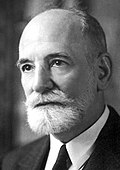
 France
Explanation
The “Universal Declaration of Human Rights” is a rulebook that says everyone in the world must be treated fairly. René Cassin, a French law teacher, worked very hard to help write this rulebook. He kept telling other leaders that people have the same rights no matter their skin color or country. When the declaration was adopted at the United Nations in 1948, it encouraged people to build a kinder world after the war. Because of it, going to school, speaking freely, and living safely are now seen as normal rights. In 1968 he received the Nobel Peace Prize for this important effort.
Related Keywords
Universal Declaration of Human Rights
The Universal Declaration of Human Rights (UDHR) was adopted by the UN General Assembly on 10 December 1948 as the first comprehensive global human-rights code. Composed of 30 articles, it spells out a wide range of rights, from freedom of expression to the right to education. Although not legally binding, it has deeply influenced subsequent treaties and national constitutions. Translated into more than 500 languages, the document is used in schools and social movements around the world. Human Rights Day, observed on 10 December each year, commemorates its adoption.
Human rights
Human rights are the set of entitlements inherent to every person, irrespective of race or nationality. They encompass civil and political liberties, socio-economic rights, and collective rights, evolving historically through revolutions and decolonization. Under international law they are safeguarded by charters, treaties, and custom, and are enshrined in domestic constitutions. New areas—such as digital privacy or environmental rights—are currently under debate. Balancing the universality of rights with cultural particularities remains a core challenge for the global community.
United Nations
The United Nations (UN) was founded in 1945 after World War II to maintain peace, promote human rights, and foster sustainable development. Its principal organs include the Security Council, the General Assembly, and the International Court of Justice, offering a forum for multilateral cooperation. Adoption of the UDHR marked one of the UN’s earliest major achievements in the human-rights field. Since then, bodies such as the Human Rights Council and treaty committees have monitored national performance on rights obligations. The UN also plays central roles in humanitarian aid and climate-change initiatives.
European Court of Human Rights
The European Court of Human Rights (ECHR), based in Strasbourg and established in 1959, oversees compliance with the European Convention on Human Rights. Individuals and NGOs can file complaints directly against member governments for alleged violations—a distinctive feature among international courts. Judgments are legally binding, obliging states to amend domestic laws or practices accordingly. René Cassin played a key role in designing this mechanism, thereby introducing judicial remedies into international human-rights protection. The court has produced landmark rulings on LGBTQ+ rights, freedom of expression, and more.
International law
International law is the legal system governing states, international organizations, and increasingly individuals, composed of treaties, custom, and general principles. It covers a vast array of fields, including the laws of war, trade regulations, and human-rights protection. While not a treaty, the UDHR has exerted normative influence over many later international instruments. Recent decades have seen expansions into areas such as the International Criminal Court and climate-change frameworks. Balancing state sovereignty with cooperative obligations remains a central debate.
Anti-discrimination
Anti-discrimination aims to eliminate unjust treatment based on race, gender, religion, disability, and other attributes. Article 2 of the UDHR states that no distinctions are permitted, laying groundwork for later treaties such as CERD and CEDAW. Domestic laws now include equality clauses and hate-speech regulations to further this goal. Emerging challenges involve algorithmic bias in AI systems and discrimination against LGBTQ+ persons. Effective enforcement relies on both education and robust legal mechanisms.