1970 Nobel Peace Prize
Reason for Award
for his efforts to alleviate the world food shortage through the Green Revolution
Laureates
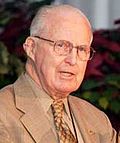
 United States of America
Explanation
Norman Borlaug studied how to grow much more rice and wheat. He created short wheat plants that still produced many grains, helping more people worldwide get enough food. He also taught farmers how to use water and fertilizer wisely, bringing hope to countries where hunger was common. Thanks to his work, more children could attend school and fewer people got sick. That is why he received the Nobel Peace Prize.
Related Keywords
Green Revolution
The Green Revolution denotes the surge of agricultural innovation in the 1960s–70s that combined high-yielding varieties, chemical fertilizers, and irrigation to boost food production in developing nations. Wheat technologies perfected in Mexico were transferred to India and Pakistan, averting severe famine. Increased yields lowered food prices and helped dampen political unrest. However, environmental impacts and widening social disparities also emerged, prompting ongoing reassessment of sustainability. Borlaug’s Nobel Prize was awarded as a symbolic recognition of this revolution.
High-yielding varieties
High-yielding varieties (HYVs) are crop cultivars that produce more grain or biomass per unit area than traditional lines. By incorporating semi-dwarf genes, stems are shorter and resist lodging, allowing heavier fertilizer use without yield loss. Multiple disease-resistance genes further stabilize production. When combined with irrigation and mechanization, these traits maximize output. HYVs transformed food security and agricultural economics and remain a foundational concept in modern breeding programs.
Wheat breeding
Wheat breeding enhances quality, yield, and resistance through genetic crossing and selection. Borlaug’s multi-location shuttle breeding shortened cycles and enabled simultaneous fixation of disease resistance and dwarfing genes, accelerating release in developing countries. Today genomic selection and CRISPR editing expand the toolbox, with climate resilience as a central target. Breeding remains a strategic field underpinning global food supplies.
Food security
Food security exists when all people have physical and economic access to safe, nutritious food at all times. The Green Revolution increased grain availability and stabilized international prices. Yet some smallholders and urban poor did not reap equal benefits. Today climate change and conflict introduce new supply shocks. Borlaug’s work laid the quantitative foundation of modern food security discussions.
Irrigation
Irrigation supplies water artificially to stabilize crop growth. HYVs require adequate moisture to realize their yield potential, so the Green Revolution involved widespread groundwater pumping and dam construction. Expanded irrigation reduced weather dependence but caused groundwater depletion and soil salinization. Modern drip systems and smart sensors aim to improve efficiency. Water management is crucial for balancing future food production with environmental sustainability.
International agricultural research
International agricultural research transcends borders to share crop improvement and farming technologies. Building on Borlaug’s achievements, the CGIAR network—housing centers like CIMMYT and IRRI—emerged in the late 1960s. Collaborative work accelerates germplasm exchange and capacity building, creating synergies across many crops. Current priorities include nutritional quality and climate adaptation, supported by data-driven science. Such cooperation is vital for global food security and the promotion of peace.