1971 Nobel Peace Prize
Reason for Award
for his Ostpolitik aimed at normalizing relations with East Germany and other Eastern European countries, paving the way for a meaningful dialogue between East and West
Laureates
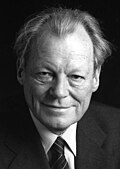
 West Germany
Explanation
Long ago Europe was divided into the fighting “East” and “West.” Mr. Brandt was the leader of West Germany and tried hard to make them friends again. He talked with East Germany, Poland and other neighbors to shake hands instead of arguing. Thanks to these efforts, the tension between countries slowly calmed down and people could travel more safely. He showed that having the courage to talk is an important way to keep peace.
Related Keywords
Ostpolitik
Ostpolitik was West German Chancellor Willy Brandt’s policy of improving relations with Eastern Bloc countries. By acknowledging post-war borders and the reality of East Germany, it created a foundation for dialogue and promoted political, economic and human exchanges in an integrated manner. The motto “change through rapprochement” represented a paradigm shift from earlier hardline approaches. It facilitated European détente, contributed to the Helsinki process, and ultimately paved the way for German reunification. International relations scholars regard it as a classic example of soft-power diplomacy during the Cold War.
Cold War
The Cold War was the prolonged confrontation between the U.S.-led West and the Soviet-led East after World War II. Although nuclear arms races and ideological clashes were intense, direct military conflict was avoided, hence the term “cold.” In Europe the division of Germany and Berlin became a central symbol, with severe restrictions on movement and information. From the late 1960s into the 1970s a wave of détente emerged, leading to arms-control talks and economic cooperation across the blocs. Brandt’s Ostpolitik is remembered as a key accelerator of this thaw.
Détente
Détente, a French word meaning “relaxation,” describes the easing of tensions between East and West in the late 1960s and 1970s. It encompassed strategic arms limitations (SALT) and expanded cooperation in human rights and economic fields. West Germany’s Ostpolitik served as the European emblem of détente by institutionalizing mutual recognition and trade with Eastern states. While détente did not end all conflicts, it established crisis-management mechanisms that lowered the risk of accidental war. Historians still debate both its achievements and its limitations.
Basic Treaty
Signed in 1972, the Basic Treaty between the Federal Republic of Germany (FRG) and the German Democratic Republic (GDR) involved mutual recognition of sovereignty and borders, enabling both states to join the United Nations. It generated practical agreements on family visits, communications and environmental cooperation, easing tensions around Berlin. Coupled with the Four-Power Agreement, it guaranteed transit rights and access routes for the city. The treaty’s historical importance lies in embedding the German question into a manageable international framework prior to reunification.
Warsaw Treaty (1970)
The 1970 Warsaw Treaty was a treaty of good-neighborliness between West Germany and Poland. It recognized the Oder-Neisse line as the official border and renounced all territorial claims. Prior to the signing, Chancellor Brandt knelt at the Warsaw Ghetto memorial, an act of apology for Nazi crimes that gained worldwide attention. The treaty softened Polish distrust of Germany and propelled détente throughout Eastern Europe. It remains a foundational document for contemporary German-Polish relations.
Berlin Wall
Erected in 1961 by East Germany, the Berlin Wall encircled West Berlin until 1990, serving to prevent escapes and information leakage. Many citizens risked—and lost—their lives trying to cross it. Through Ostpolitik, crossing regulations were eased and limited family visits became possible. The Wall stood as the ultimate Cold War symbol; its fall in 1989 signaled the end of Europe’s division. Brandt, witnessing the collapse, said “Now is the time to grow together,” underscoring how his diplomatic legacy contributed to reunification.
Warsaw Genuflection
On 7 December 1970, Chancellor Brandt unexpectedly knelt before the Warsaw Ghetto Uprising memorial. Remaining silent with his head bowed, he offered a symbolic apology for Nazi persecution of Jews. The image was broadcast worldwide and became an emblem of moral leadership. Far from mere theater, the gesture advanced trust during treaty negotiations. It also intensified debates on historical responsibility within Germany, underscoring the significance of reconciliation diplomacy.