1976 Nobel Peace Prize
Reason for Award
for the courageous efforts in founding a movement to put an end to the violent conflict in Northern Ireland
Laureates
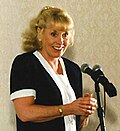
 United Kingdom of Great Britain and Northern Ireland
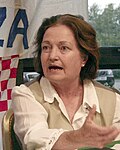
United Kingdom of Great Britain and Northern Ireland
Explanation
In Northern Ireland, two groups—Catholics and Protestants—were fighting. Bombs and guns made everyday life scary, even for children. Betty Williams and Mairead Corrigan said, “Let’s stop the violence,” and walked through the streets holding hands with other mothers. They asked everyone to talk together and be friends, no matter their religion. Their brave idea spread, the fighting became less, and they received the Nobel Peace Prize.
Related Keywords
Northern Ireland conflict
A political-religious conflict from the late 1960s until the 1998 Belfast Agreement. It pitted mainly Protestant unionists wishing to remain in the UK against mainly Catholic nationalists seeking Irish reunification, causing about 3,500 deaths. Clashes between security forces and paramilitaries became routine, deeply affecting daily life. Even after the formal end, reconciliation and memory issues persist. The 1976 Nobel Peace Prize honored a grassroots movement within this conflict.
The Troubles
The common name for the Northern Ireland conflict, marked by riots, bombings, and assassinations. Iconic events include the 1969 Bogside riots and the 1972 Bloody Sunday massacre. Media coverage drew global attention, making it a staple case study in conflict research. The Peace People offered a non-violent civic alternative during the Troubles. Scholars analyze the Troubles through lenses of ethnic conflict, religious division, and colonial legacy.
peace movement
Social and political activities aiming to end war and violence and foster reconciliation. Examples include anti-World War I activism and nuclear disarmament campaigns. The Peace People represent a localized yet internationally supported peace movement. Success factors include commitment to non-violence, grassroots organization, and media strategy. Peace movements often seek not only policy change but also shifts in cultural values.
non-violent resistance
Methods of pursuing social change without violence, including strikes, boycotts, and peace marches. Classic examples are Gandhi’s Salt March and Martin Luther King Jr.’s civil rights actions. Studies show non-violent campaigns statistically succeed more often than armed struggles. The Peace People adopted non-violent resistance within a sectarian conflict, quickly winning civic sympathy. Non-violence boosts both moral legitimacy and international support.
civil society
The aggregate of voluntary organizations and networks outside state and market structures. Includes NGOs, trade unions, religious bodies, and seeks the public good. In peacebuilding, civil society promotes dialogue, supports victims, and monitors policy. In Northern Ireland, churches and community groups aided conflict mitigation, with the Peace People as a symbolic actor. Civil society robustness is often used as a measure of democratic quality.
community dialogue
A method where residents from opposing sides meet in a safe space to foster mutual understanding. Facilitator mediation and ground rules are vital, aiming to share emotions and identify joint issues. In Northern Ireland, inter-school exchanges and neighborhood forums reduced tensions. Peace People rallies are viewed as early large-scale community dialogues. The practice is linked theoretically to the contact hypothesis and conflict-transformation models.
women in peacebuilding
The active involvement of women in conflict resolution and reconciliation processes. UN Security Council Resolution 1325 institutionalized the Women, Peace and Security agenda. Studies indicate agreements are more durable when women participate. Williams and Corrigan foregrounded their identity as mothers, reshaping conflict narratives. Their success highlighted the importance of a gender perspective in peace efforts.