1980 Nobel Peace Prize
Reason for Award
for being a source of inspiration to repressed people, especially in Latin America
Laureates
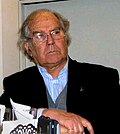
 Argentina
Explanation
Adolfo Pérez Esquivel is a kind teacher from Argentina who wanted people to solve problems by talking, not fighting. He stood up to soldiers who scared ordinary citizens and kept saying, “Everyone has the right to live in peace.” Because of that, he was arrested and bullied many times, but he never used violence. Just like we try to talk calmly instead of shouting at friends, he asked grown-ups and governments to talk things over. His bravery gave hope to people all across Latin America and lit a flame of peace. For this, he received the Nobel Peace Prize. He showed that a caring heart can be stronger than any weapon.
Related Keywords
human rights
Human rights are the freedoms and protections inherent to every person, including liberty, equality, safety, and freedom of expression. They are enshrined in instruments such as the Universal Declaration of Human Rights. Latin-American military regimes committed massive violations—torture, forced disappearances, and censorship. Esquivel exposed these abuses through documentation and advocacy, mobilizing global public opinion. His work fueled a wave of regional NGOs and shaped the evolution of contemporary international human-rights law.
non-violence
Non-violence is a philosophy of societal change that rejects all physical or psychological harm to opponents. Exemplified by Mahatma Gandhi and Martin Luther King Jr., it relies on moral appeal and mass mobilization. Esquivel adapted the approach to Latin America, blending strikes, cultural events, and international petitions. Non-violence provided not only moral legitimacy but also a cost-intensifying strategy against repression. It ultimately undermined the juntas’ legitimacy and helped trigger democratization.
Servicio Paz y Justicia (SERPAJ)
Founded in 1974, SERPAJ is a South-American network-based NGO operating mainly through Catholic base communities. Its core programs include compiling detention lists, lobbying international organizations, and conducting non-violence workshops. As the first executive secretary, Esquivel oversaw network expansion and fundraising. SERPAJ later opened branches under Chile’s Pinochet regime and Brazil’s military government, achieving cross-border solidarity. It continues to engage in regional issues, such as monitoring the Colombian peace process.
military dictatorship
A military dictatorship is a political regime in which the armed forces seize power without elections and govern through martial law and secret police. In Argentina, the junta ruled from 1976 to 1983, causing nearly 30,000 disappearances under the banner of the “National Reorganization Process.” Opponents were labeled “terrorists,” mass-detained, and media freedoms were heavily curtailed. Esquivel exposed these mechanisms through art and church networks, drawing international attention. External pressure and economic collapse forced the junta’s resignation, and democracy has remained in Argentina since.
Latin America
Latin America refers to the countries south of the United States plus the Caribbean, where Spanish and Portuguese are predominant. During the latter 20th century, the region was heavily influenced by Cold-War dynamics, leading to frequent military regimes and civil wars. Severe economic inequality and discrimination against indigenous peoples made human-rights activism crucial. Esquivel’s movement transcended borders, inspiring grassroots organizations in El Salvador, Guatemala, Brazil, and beyond. Today non-violence and human-rights advocacy are recognized as core values underpinning regional integration and democratization.
liberation theology
Liberation theology, formulated by Latin American Catholic clergy in the late 1960s, calls for a “church that stands with the poor.” It links biblical interpretation to critique of social structures and demands systemic change that eradicates poverty and oppression. Esquivel built his non-violent resistance model on this theological foundation, connecting faith with social activism. The juntas equated the movement with communism and repressed it, yet it took root through the empowerment of rural communities. Liberation theology continues to inform struggles for environmental justice, gender equality, and other contemporary issues, serving as a theoretical basis for sustained social transformation.