1982 Nobel Peace Prize
Reason for Award
for their monumental achievements and internationally recognized contributions in playing a pivotal role in United Nations disarmament negotiations
Laureates
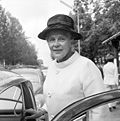
 Sweden
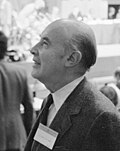
 Mexico
Explanation
There are many bombs and missiles in the world. If everyone keeps too many weapons, small fights can grow into big wars. Ms. Myrdal and Mr. García Robles asked the world’s countries to “reduce weapons and live in peace.” They talked again and again at the United Nations, telling nations to get rid of nuclear arms. Thanks to their work, countries in South America promised not to build nuclear weapons and many others made plans to cut down their arsenals. Because they tried to solve problems with words instead of weapons, they received the Nobel Peace Prize.
Related Keywords
Disarmament
Disarmament is the deliberate reduction or elimination of a nation’s weapons, especially weapons of mass destruction and major conventional arms. Its goals include lowering the risk of accidental war, reallocating military budgets to social needs, and building trust in international relations. Historical examples range from the 1920s Washington Naval Treaty to the strategic arms-reduction negotiations of the late 20th century. A core challenge in disarmament talks is “verification,” carried out through satellite imagery, on-site inspections, and other tools. Disarmament complements “arms control,” which focuses more on stabilizing force relationships than on absolute numbers. The work of Myrdal and García Robles is credited with making disarmament a realistic policy option in global diplomacy.
Nuclear-weapon-free zone
A nuclear-weapon-free zone (NWFZ) is a treaty-based regime that bans the development, deployment, testing, and use of nuclear arms within a defined region. The 1967 Treaty of Tlatelolco covering Latin America and the Caribbean was the first such arrangement. NWFZ treaties also bind external nuclear-armed states via protocols that provide “negative security assurances,” pledging not to use or threaten nuclear force in the zone. The mechanism narrows the security gap between nuclear and non-nuclear nations and acts as a barrier to proliferation. Verification is linked to IAEA comprehensive safeguards and, in some cases, on-site inspections. Today, similar zones in the South Pacific, Africa, and Central Asia mean that over half of humanity lives in areas legally free of nuclear weapons.
Treaty of Tlatelolco
Signed in February 1967 in the Tlatelolco district of Mexico City, the Treaty of Tlatelolco establishes a nuclear-weapon-free zone in Latin America and the Caribbean. Drafted chiefly by García Robles, it is often regarded as his diplomatic masterpiece. Comprising 30 articles, two additional protocols, and several annexes, it created the permanent agency OPANAL for compliance verification. All 33 regional states are now parties; full entry into force was achieved when Cuba ratified in 2002. The two protocols bind external nuclear-weapon states such as the U.S., U.K., France, China, and Russia to negative security assurances. The treaty’s architecture served as a template for later agreements like the Rarotonga and Pelindaba treaties.
UN Conference on Disarmament
The UN Conference on Disarmament (CD) is the permanent multilateral negotiating forum for arms control, located in Geneva. It evolved from the 18-Nation Disarmament Committee (ENCD) of 1962–1968, where Myrdal served as co-chair. Foundational treaty texts such as the Comprehensive Nuclear-Test-Ban Treaty (CTBT) and the Chemical Weapons Convention (CWC) were negotiated within the CD. The body operates by consensus, meaning any single state can block a decision. Consequently, the skill of the rotating presidency often determines the pace of progress. Procedures instituted during Myrdal’s tenure still underpin discussions on emerging issues like cyber and space weapons.
Arms Control
Arms control is the practice of regulating, rather than eliminating, weapons to enhance strategic stability. SALT I & II and the INF Treaty are classic examples, aiming to avoid conflict escalation by increasing transparency. Arms control and disarmament lie on a continuum: the former stresses balance, the latter emphasizes absolute reductions. In practice, states often pursue arms control first to build confidence and then move toward deeper disarmament. Verification and monitoring technologies, along with data-exchange mechanisms, are critical to success. Myrdal’s advocacy of “gradual disarmament” effectively incorporated arms-control stages into a flexible strategy.
Nuclear Non-Proliferation Treaty
Signed in 1968 and in force since 1970, the NPT seeks to curb the spread of nuclear weapons while guaranteeing peaceful uses and pursuing disarmament—the treaty’s three pillars. Articles II and III prohibit non-nuclear-weapon states from acquiring nuclear arms and mandate acceptance of IAEA safeguards. Article VI obliges nuclear powers to negotiate disarmament, reflecting ideas championed by Myrdal and García Robles. Review conferences are held every five years to examine implementation. Critics argue that nuclear states have not sufficiently fulfilled their disarmament obligations. Nevertheless, the NPT remains the cornerstone regime limiting nuclear proliferation.
Confidence-building measures
Confidence-building measures (CBMs) increase transparency of military activities to prevent conflicts born of misunderstanding or accidents. Examples include advance notifications, observation invitations for exercises, and the establishment of hotlines. CBMs often serve as prerequisites for successful disarmament talks by reducing threat perceptions between adversaries. They evolved in instruments like the 1975 Helsinki Final Act and the Conventional Forces in Europe (CFE) Treaty. Myrdal and García Robles institutionalized CBMs by embedding verification and reporting in regional nuclear-free-zone regimes. Today, CBMs are being proposed for new domains such as cyberspace and outer space.
Cold War
The Cold War (1945–1991) was a period of political and military rivalry between the U.S. and the Soviet Union. Massive deployments of nuclear weapons and ideological competition placed humanity under the threat of “mutually assured destruction” (MAD). Diplomacy of the era involved complex maneuvering to avoid nuclear war while expanding spheres of influence. Disarmament and arms-control talks—SALT, START, INF—were key tools for managing the conflict. In the early 1980s, tensions resurged, and the 1982 Nobel award symbolized global demand for renewed détente. Even after the Cold War, nuclear weapons persist, and disarmament challenges continue in new forms.