1987 Nobel Peace Prize
Reason for Award
for his dedicated efforts to achieve lasting peace in Central America, including mediation in the conflicts involving Nicaragua and El Salvador
Laureates
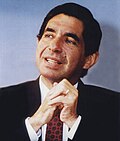
 Costa Rica
Explanation
Óscar Arias Sánchez, the president of Costa Rica, asked nearby countries that were fighting to sit down and talk peace. Instead of using guns and tanks, he used words and promises to solve problems. Leaders met at one table and signed papers saying they would stop the fighting. Thanks to this, battles in places like Nicaragua and El Salvador became fewer. Because he helped children go to school safely and families live without fear, he received the Nobel Peace Prize.
Related Keywords
Central American Peace Process
The term denotes the comprehensive efforts led mainly by regional leaders to quell civil wars amid Cold-War tensions in the 1980s. It unfolded in several stages, including the Contadora initiative, the Arias Plan, and the Esquipulas I and II Accords. A distinguishing feature was the integrated treatment of cease-fires, democratization, economic reconstruction, and refugee repatriation. International bodies and donor states supplied verification missions and financial assistance to support implementation. Ultimately the process ended the wars in Nicaragua, El Salvador, and Guatemala, laying the foundation for regional stability.
Esquipulas Agreement
Signed in August 1987 at Esquipulas, Guatemala, the agreement is a peace document endorsed by five Central American heads of state. Its formal title is “Procedure for Establishing a Firm and Lasting Peace and Promoting Democracy in Central America.” The accord rests on four pillars: cease-fire, elections, human rights, and international verification. Legally binding schedules mandated concrete steps within 60 days of ratification. A joint UN-OAS monitoring structure (ONUCA, CIAV) was created to guarantee compliance.
Arias Plan
The Arias Plan was a peace proposal advanced by Costa Rican President Arias that became the blueprint for Esquipulas II. It contained detailed provisions on indigenous rights, press freedom, and reintegration of armed groups. To diminish super-power proxy influence, the plan prioritized region-driven diplomacy. It included a timetable for progress reviews and deployment of neutral observers, giving it strong operational credibility. Today it remains a prominent case study in international negotiation theory.
Nicaraguan Conflict
After the 1979 Sandinista Revolution, government forces clashed with the U.S.-backed Contra rebels, creating a civil war. Neighboring states and super-powers intervened, turning the conflict into a prolonged Cold-War proxy. The Esquipulas framework introduced cease-fire mechanisms, and elections in 1990 brought a change of government. The war caused roughly 30 000 deaths and massive refugee flows, leaving ongoing challenges for reconstruction and reconciliation. The peace process became a reference model for resolving intra-state conflicts under international law.
Salvadoran Civil War
From 1980 to 1992 government forces fought the FMLN guerrillas in El Salvador. Widespread human-rights violations and massacres prompted international concern. Following the Esquipulas accords, UN mediation led to the 1992 Chapultepec Peace Agreement. The pact included military, judicial reforms, and a Truth Commission, marking a democratic turning point. Arias’s diplomatic groundwork is credited with enabling the conflict’s eventual resolution.
Mediation Diplomacy
Mediation diplomacy is a technique in which a third party facilitates dialogue and helps build agreements between conflicting sides. It employs tools such as confidence-building, agenda-setting, and proposal of compromise formulas. Arias leveraged Costa Rica’s neutral small-state status to reconcile the interests of both belligerent parties and external powers. Mediation diplomacy is regarded as cost-effective and essential for sustainable peace. The practice is widely studied through game-theory models and negotiation analytics.
International Observer Mission
International observer missions are specialized teams deployed by the UN or regional bodies to verify cease-fire compliance or election integrity. In Central America, ONUCA and CIAV-OAS served as notable examples, conducting military monitoring and human-rights investigations. They quantified disarmament progress and released public reports to ensure transparency. Cooperation with local communities enhanced trust and helped prevent relapse into violence. Their success has informed peace-building models in other regions.