1989 Nobel Peace Prize
Reason for Award
for advocating peaceful solutions based upon tolerance and mutual respect in order to preserve the historical and cultural heritage of his people
Laureates
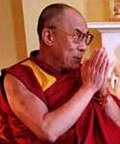
 Tibet
Tibet
Explanation
The 14th Dalai Lama is the spiritual leader of the people who live in the high mountains called Tibet. He asks everyone to solve problems with talking and kindness instead of fighting. Even after he had to leave his home, he kept teaching Tibetan language, dances, and temples so they would not be lost. Because he shared this gentle way with the whole world, he received the Nobel Peace Prize. He reminds us that when we want to quarrel with friends, we should first think about their feelings and talk calmly.
Related Keywords
Non-violence
Non-violence is an ethical and political stance that refuses to use physical force to achieve goals. Popularised by Mahatma Gandhi during India's independence movement, it keeps moral high ground while resisting oppression. The 14th Dalai Lama linked the idea to the Buddhist ethic of compassion and made it the core of the Tibetan struggle. Although non-violent campaigns may appear slow, they break cycles of retaliation and open new chances for dialogue in the long term. Such movements easily gain sympathy and support from the international community. Today, social movements worldwide adopt non-violence as a central strategic principle.
Middle Way Approach
The Middle Way Approach is the Dalai Lama's proposed solution to the Tibetan question, seeking genuine autonomy rather than full independence. It applies the Buddhist idea of avoiding extremes to politics. The proposal accepts China's sovereignty while demanding freedom in internal, religious and cultural affairs. This aligns with the concept of internal self-determination in international law and is valued as a face-saving negotiation strategy. Officially articulated in the 1988 Strasbourg Proposal, it has been endorsed in several Western parliamentary resolutions. Though progress is uneven, the approach keeps the door to dialogue open.
Tibetan cultural heritage
Tibetan cultural heritage encompasses a wide array of assets, including Buddhist art, monastic architecture, oral epics, medicine and calendrical science. Developed in the harsh environment of the high plateau, it embodies both vulnerability and rarity. Political upheavals after 1959 placed many monasteries and crafts in danger of extinction. The Dalai Lama and the exile community have worked to preserve them through scripture copying, reconstruction projects and educational programmes. UNESCO and international NGOs support these efforts by listing intangible elements and funding conservation. Protecting this heritage sustains Tibetan identity and constitutes an irreplaceable asset for all humankind.
Five Point Peace Plan
The Five Point Peace Plan was announced before the US Congress in 1987 as a roadmap for Tibetan reconciliation. Its pillars are: 1) turning all of Tibet into a zone of peace, 2) stopping population transfer from China, 3) respecting human rights and democracy, 4) protecting the environment, and 5) opening sincere negotiations between Chinese and Tibetan representatives. The plan argues that demilitarising the plateau would contribute to Asian stability. It also links environmental conservation with cultural protection, offering a model of sustainable development. The European Parliament and the Nobel Committee commended its vision. Although negotiations remain stalled, the document still frames discussion of the issue.
Exile government
The Central Tibetan Administration (CTA), often called the exile government, was founded in Dharamsala, India, in 1959. Initially the Dalai Lama held executive, judicial and legislative powers, but democratic reforms transferred authority to an elected Sikyong (prime minister) and parliament. Although the CTA lacks international recognition, it runs education, health and cultural programmes for the diaspora. Its diplomatic section keeps the Tibetan issue on the agenda of foreign parliaments and international bodies. Funding comes mainly from donations and overseas enterprises, and an audit system has been introduced to enhance transparency. Scholars study the CTA as a governance model below the level of a recognised state.
Human rights
Human rights are universal entitlements that every person possesses, covering freedom, security and cultural identity among other aspects. Various reports indicate that rights such as freedom of religion and mother-tongue education have been restricted in Tibet. The Dalai Lama argues that political solutions will become easier once Tibetans' human rights are respected. NGOs regularly brief the UN Human Rights Council on Tibet, and the situation is discussed during the Universal Periodic Review. Rights issues mobilise international media and civil society, placing pressure on governmental negotiations. The Tibetan case confirms that respect for human rights is a fundamental component of sustainable conflict resolution.