1993 Nobel Peace Prize
Reason for Award
for their work for the peaceful termination of the apartheid regime, and for laying the foundations for a new democratic South Africa
Laureates
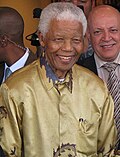
 South Africa
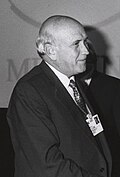
South Africa
Explanation
Just as classmates make peace after a quarrel, solving big conflicts also starts with talking. In South Africa there was an unfair rule called “apartheid” that separated white and black people. Mr. Mandela and Mr. de Klerk decided to end the fighting and let everyone live equally. Even after spending many years in prison, Mr. Mandela chose discussion instead of hatred. Mr. de Klerk, who was president, erased the old racist laws. Together they promised to hold free elections so every person could vote. South Africa changed peacefully, and the world honored their hard work with the Nobel Peace Prize.
Related Keywords
apartheid
The state-sanctioned system of racial segregation in South Africa from 1948 to 1994. It divided public facilities, residential areas, education, and marriage to enforce white supremacy and stripped non-whites of political rights. The UN passed repeated condemnatory resolutions, imposing an arms embargo in 1977 and strengthening economic sanctions in the 1980s. Domestic resistance included the Soweto student uprising and labor strikes, met with severe repression under security legislation. The combination of Cold War decline and economic crisis pushed the regime toward negotiations in the early 1990s. Apartheid remains a key case in studies of colonial legacies and complex discriminatory systems.
South Africa
A multi-ethnic state at Africa’s southern tip with 11 official languages. Despite rich gold and diamond resources and an advanced industrial base, the country faced international isolation under apartheid. Since democratization in 1994, it has pursued active diplomacy within the UN, the African Union, and as a BRICS member. Persistent challenges include economic inequality, unemployment, and high crime, yet its constitutional democracy and independent judiciary are seen as pillars of regional stability. The Truth and Reconciliation Commission model has influenced transitional-justice policies worldwide.
peace negotiations
Structured dialogue aimed at resolving political or military conflicts through non-violent means. In South Africa, CODESA and the Multi-Party Negotiating Forum served as the main platforms. Negotiation theory concepts such as BATNA, ZOPA, and Ripeness were applied to analyze bargaining space and sunk costs. International mediators and monitoring missions built trust and provided third-party guarantees to reduce relapse into violence. A multi-stage agreement sequence—interim constitution to final constitution—enhanced flexibility in top-level (Track 1) talks.
Truth and Reconciliation Commission
Established in 1995, South Africa’s TRC investigated politically motivated human-rights abuses, publicly broadcasting victim testimonies and perpetrator confessions. Its linkage of amnesty to truth disclosure is viewed as a hybrid of retributive and restorative justice. Praised for psycho-social healing and historical documentation, it is criticized for delayed reparations and leaving structural inequality intact. Peru, Kenya, and Canada’s Indigenous inquiries emulated the model, making it a core case in comparative transitional-justice research.
democratization
The process of transitioning from authoritarian rule to a political system characterized by free and fair elections, rule of law, and civil liberties. South Africa’s democratization is categorized as a pacted transition, notable for achieving change through peaceful negotiation rather than military defeat or revolution. While elite pacts enhance short-term stability, they are debated for potentially entrenching socio-economic inequalities.
Nobel Peace Prize
An international award established by Alfred Nobel’s will, presented annually in Oslo to individuals or organizations with outstanding contributions to conflict resolution, human rights, or disarmament. Since 1901 it has wielded high political symbolism and media attention. Receiving the prize brings funding and global recognition but can also attract political pressure and criticism. In South Africa’s context, earlier laureates like Martin Luther King Jr. and later Archbishop Desmond Tutu highlighted global endorsement of anti-apartheid struggles.
national reconciliation
A process in which formerly opposing groups acknowledge past violence and discrimination, offer apologies, and build a new social contract. In South Africa this included the TRC, revised school curricula, and adoption of multi-ethnic national symbols. Scholars argue reconciliation must link emotional healing with structural remedies such as land reform and employment policy to be sustainable. It is an interdisciplinary research theme spanning psychology, sociology, and political science.
suffrage
The right to vote and participate in political decision-making. Under apartheid it was almost exclusively reserved for whites, while black majority voting was confined to limited local structures. The April 1994 general election granted universal suffrage to all citizens aged 18 and above, with over 50 million registered. Long queues stretching kilometers testified to high turnout, marking a symbolic moment for democracy. Observer missions reported no significant fraud and the results were widely endorsed by the international community.