1996 Nobel Peace Prize
Reason for Award
for their work towards a just and peaceful solution to the conflict in East Timor
Laureates
 Timor-Leste
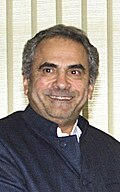
Timor-Leste
Explanation
On a small island nation called East Timor, fighting and conflict had continued for many years. Bishop Belo and diplomat Ramos-Horta tried to solve the problem with dialogue instead of violence. They wrote letters to people all over the world so that everyone would learn about East Timor. They also helped injured people and taught children how important peace is. Even when they faced powerful opponents, they never used violence and acted with courage and kindness. Because of these efforts, they received the Nobel Peace Prize.
Related Keywords
East Timor conflict
After Portugal’s withdrawal in 1975, East Timor experienced a power vacuum and was invaded by Indonesia. Roughly one-third of the population was killed or displaced, while Cold-War dynamics and resource interests complicated the situation. The conflict was long labelled a “forgotten war,” with heavy media restrictions and little information leakage. Belo and Ramos-Horta broke this silence by presenting data and eyewitness accounts that exposed the reality on the ground. Consequently, the issue became a flagship case for 1990s human-rights diplomacy and influenced Western policies toward Indonesia.
non-violent movement
Their struggle is often described as an Asian variant of the non-violent tradition exemplified by Gandhi and Martin Luther King Jr. Belo preached renunciation of retaliation in his masses, while Ramos-Horta publicly rejected armed struggle. A pragmatic assessment that violent escalation would cause more civilian casualties underlay their stance. In the long run, non-violence afforded greater international legitimacy, attracting diplomatic support that might have been denied to an armed rebellion. The strategy has become a key case study in research on ‘small-state security’.
right to self-determination
The UN Charter (Article 1) and GA Resolution 1514 enshrine peoples’ right to self-determination, forming the legal core of the Timor question. While both Portugal and Indonesia asserted historical claims, a referendum to ascertain the will of the inhabitants became central. Ramos-Horta cited ICJ precedents such as the Western Sahara advisory opinion to argue the illegality of occupation. The 1996 Nobel award reinforced the frame of ‘peaceful realisation of self-determination,’ and UN-brokered negotiations reiterated the principle. Ultimately, the 1999 referendum produced a 78.5 % vote for independence, clarifying international legal recognition.
UN intervention
UNAMET, created in 1999, organised and verified the referendum. Following widespread militia violence, the Australian-led INTERFET multinational force was deployed. The UN then established PKF and UNTAET, administering governance, justice, and security under direct international authority. The decades-long lobbying of Belo and Ramos-Horta is credited with shaping the political conditions for Security Council Resolutions 1264 and 1272. East Timor achieved formal independence in 2002, and the intervention is often cited as a ‘success case’ in peace-building literature.
human-rights advocacy
Arbitrary arrests, torture, and forced relocations were commonplace in East Timor. Belo collected victims’ testimonies through church networks and shared them with human-rights NGOs. Ramos-Horta cooperated with Amnesty International and Human Rights Watch to include detailed Timor cases in annual reports. This documentation provided empirical support during debates at the UN Commission on Human Rights. The 1996 award enhanced the credibility of their reports and intensified calls for international fact-finding missions. The process ultimately led to the establishment of the International Commission of Inquiry on East Timor and later the CAVR truth commission.
1999 referendum
After the fall of the Suharto regime in 1998, East Timor became a litmus test for Indonesia’s democratisation. A tripartite agreement among the UN, Portugal, and Indonesia paved the way for the 30 August 1999 referendum on autonomy versus independence. With a turnout of 98.6 %, the majority voted for independence. Immediately afterward, pro-Indonesian militias launched retaliatory violence, prompting urgent international action. The INTERFET and subsequent UNPKF deployment are studied as an early application of the ‘Responsibility to Protect’ (R2P) norm. East Timor finally became independent on 20 May 2002, and Ramos-Horta later served as the nation’s president.