2000 Nobel Peace Prize
Reason for Award
for his work for democracy and human rights in South Korea and in East Asia in general, and for peace and reconciliation with North Korea in particular
Laureates
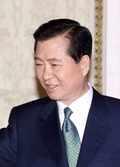
 Korea (the Republic of)
Explanation
Mr. Kim Dae-jung tried hard, as president of South Korea, to build a country where everyone could speak freely. In the past, criticizing the government could lead to jail, but he wanted to change that. Even when he was put in prison or his life was threatened, he never gave up. After becoming president, he started the “Sunshine Policy,” a friendly way to talk with North Korea. In 2000 he met North Korea’s leader for the first inter-Korean summit and helped separated families meet again. The world noticed these efforts and gave him the Nobel Peace Prize. His story teaches us how important it is to let people share ideas and to stop fighting.
Related Keywords
Democracy
A system in which citizens participate in politics—mainly through elections—and control the government. Kim Dae-jung fought the military dictatorship in South Korea and demanded democratic elections and parliamentarism. His struggle led to the introduction of direct presidential elections in 1987, widening political rights. Democracy is built on freedom of expression and the rule of law, enabling human-rights protection and peaceful decision-making. The Korean case is often cited as a peaceful transition model from authoritarianism.
Human Rights
The inherent dignity and freedoms possessed by every person. South Korea’s military governments practiced torture and censorship for years, and Kim Dae-jung exposed these abuses with help from the international community. As president he created the National Human Rights Commission and institutionalized human-rights education and remedy procedures. Respect for human rights is the backbone of democracy and a prerequisite for a peaceful society. His initiatives are seen as pioneering human-rights governance in Asia.
Sunshine Policy
An engagement strategy toward North Korea launched by the Kim administration in 1998. Instead of threats, it sought to induce change through cooperation and exchanges. Projects included the Kaesong Industrial Complex, food and medical aid, and cultural and sports exchanges. The name derives from Aesop’s fable “The North Wind and the Sun,” implying persuasion through warmth rather than force. Internationally it became a key example of engagement diplomacy.
Inter-Korean Summit
Held in Pyongyang in June 2000, the first direct meeting between the leaders of South and North Korea since the armistice. The summit produced the 6·15 Joint Declaration covering autonomous unification efforts, economic cooperation, and family reunions. It eased military tensions and gained international backing. The meeting became a historic turning point that shaped subsequent roadmaps for inter-Korean relations.
Arms Reduction
The process of reducing a nation’s weapons or armed forces. Although the Sunshine Policy did not produce a comprehensive disarmament treaty, it advanced confidence-building measures such as halting hostile acts and establishing accident-prevention talks in the DMZ. These steps lowered the risk of accidental clashes and widened space for dialogue. Arms reduction is a key theme of the Peace Prize and is usually addressed through international law and multilateral negotiations.
Peacebuilding
Political, social, and economic efforts to establish lasting peace during or after conflict. Kim Dae-jung promoted simultaneous reconciliation at home and cooperation in Northeast Asia, offering a multi-level peacebuilding model. His mix of humanitarian aid, confidence building, and institutional reform approaches aligns with the concept of “positive peace.” The model has provided theoretical insights for UN and NGO peace operations.
Civil Movement
Organized actions by ordinary citizens outside government to demand social change. In South Korea during the 1970s-80s, labor, student, and religious groups joined forces, with Kim Dae-jung as a symbolic leader. The movement relied on non-violent resistance and gained support from the international community, pressuring the military regime. It eventually succeeded in democratization and influenced movements in other countries.
Reconciliation with North Korea
The process by which the long-hostile Koreas build mutual understanding and cooperation. Through the Sunshine Policy and the summit, family reunions and economic cooperation were realized, and media coverage and public opinion highlighted the value of dialogue. Full reconciliation has not yet been achieved, but the shift from mutual denial to limited partnership has positively affected regional security.