2002 Nobel Peace Prize
Reason for Award
for his decades of untiring effort to find peaceful solutions to international conflicts, to advance democracy and human rights, and to promote economic and social development
Laureates
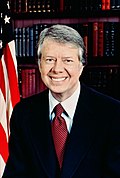
 United States of America
Explanation
Jimmy Carter is a former president of the United States who has spent many years trying to stop fights around the world. For example, he invited leaders of countries that were about to go to war into the same room and helped them talk calmly. He also travels to different places to make sure elections are fair so that everyone can speak freely. For sick people, he sends doctors and medicine so they can get better. All these actions help people live together peacefully. The Nobel Peace Prize was given to him because these efforts are wonderful and important. We can learn from him that talking and helping are better than fighting.
Related Keywords
Peaceful resolution of international conflicts
Peaceful resolution of international conflicts refers to processes in which opposing states or groups reach agreements through negotiation, arbitration, or mediation without resorting to force. Carter’s brokering of the Egypt–Israel peace and his shuttle diplomacy in the North Korean nuclear crisis demonstrated the practical efficacy of this approach. Such processes require confidence-building measures that mitigate mutual security fears and verification mechanisms that monitor phased implementation of agreements. Respect for frameworks grounded in international law and the UN Charter enhances the legitimacy and durability of settlements. Peaceful resolution reduces military expenditure, spares civilian lives, and contributes to achieving the Sustainable Development Goals (SDGs).
Democracy
Democracy is a political system in which citizens participate in governance and choose their leaders, based on free elections, freedom of speech, and the rule of law. Carter has supported emerging democracies by observing elections and deterring fraud, ensuring that public will is accurately reflected. Fair elections enhance the legitimacy of power holders and act as a safety valve that avoids violent regime change. Democracy also protects minority rights and increases policy transparency, strengthening social inclusion. Over the long term, accountable governments foster conditions in which economic growth and respect for human rights can coexist.
Human rights
Human rights are the inherent rights and freedoms that every person possesses, covering life, liberty, speech, religion, and more. Even during the Cold War, the Carter administration adopted a human-rights-based foreign policy, withholding aid and imposing sanctions on military dictatorships. Respect for human rights not only legitimizes governments domestically and internationally but also acts as a preventive factor against conflict. The international community has established legal foundations through the Universal Declaration of Human Rights and the International Covenants, framing human rights as universal values. Nevertheless, violations persist worldwide, making continued monitoring by civil society and international organizations indispensable.
Economic and social development
Economic and social development aims to improve quality of life through poverty reduction, expanded education, and better health. The Carter Center approaches development via health, targeting Guinea worm eradication, malaria control, and more. Improved public health boosts labor productivity and breaks cycles of poverty. Education and infrastructure foster social inclusion and contribute to political stability. Development and peace are interdependent, and addressing development challenges is indispensable for sustainable peacebuilding.
The Carter Center
The Carter Center is a non-profit organization founded in 1982 by Jimmy and Rosalynn Carter in Atlanta, Georgia. Its mission is “to wage peace, fight disease, and build hope.” The Center runs diverse programs, including international election observation, disease eradication, and mental-health advocacy. By integrating academic research with field practice, it achieves results through both policy recommendations and direct assistance. Working in partnership with the UN, WHO, and other bodies, it serves as a platform for holistic responses to complex global challenges.
Election observation
Election observation involves domestic and international experts and citizens monitoring electoral processes to verify fairness and transparency. Since the 1989 Panamanian election, the Carter Center has observed more than 110 elections, deterring fraud and bolstering democratic legitimacy. Observation includes visiting polling stations, verifying recounts, and analyzing media environments. Findings are published in detailed reports and translated into recommendations for governments and international organizations. Election observation plays a vital role in increasing public trust and preventing political instability.
International mediation
International mediation is a diplomatic technique in which a third party facilitates communication between adversaries and proposes compromises that lead to peace agreements. Carter has leveraged his credibility as a former president to engage in both formal and informal mediation. Success factors include neutrality, phased negotiations, and the strategic use of back-channel talks. Effective mediation can produce ceasefire agreements, improve humanitarian conditions, and open pathways for development aid. Collaboration with multilateral and regional organizations enables monitoring of implementation and mobilization of resources.