2008 Nobel Peace Prize
Reason for Award
for his efforts to resolve the armed conflict in Aceh, Indonesia
Laureates
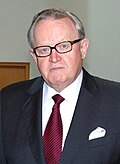
 Finland
Explanation
Mr. Martti Ahtisaari helped people in a place called Aceh in Indonesia stop fighting. Instead of using guns, he asked everyone to sit at one table and talk. He listened carefully to each side so they felt respected. In 2005 they signed a peace promise called the Helsinki Agreement. Soldiers gave up their weapons and children could safely go back to school. Because his work saved many lives and brought calm, he received the Nobel Peace Prize. His story shows that using words, not violence, is the best way to solve problems—even for us when we argue with friends.
Related Keywords
Aceh peace process
The Aceh peace process refers to the sequence of negotiations and implementation mechanisms that ended the civil war between the Indonesian government and the Free Aceh Movement (GAM) that had raged since 1976. The 2005 Helsinki Agreement achieved a cease-fire, disarmament, autonomy, and political participation for ex-combatants. The post-tsunami humanitarian crisis and global public opinion helped catalyze talks. The EU-ASEAN Aceh Monitoring Mission supervised compliance and prevented conflict relapse. Scholars view the process as a benchmark for introducing international guarantees into an internal conflict settlement. Long-term stability hinges on sustained development aid and comprehensive victim support.
mediation
Mediation is a peaceful dispute-resolution method in which a third party enters between conflicting actors to facilitate agreement. Impartiality and neutrality underpin trust, and package deals balancing interests are common. Ahtisaari leveraged his former head-of-state prestige and Finland’s non-aligned image to act as mediator. The process often blends secret and public talks and employs a single-text approach to manage drafts. Designing post-agreement monitoring and funding mechanisms enhances effectiveness. In post-Cold-War internal conflicts, NGOs and individual mediators have joined the UN and regional bodies as pivotal mediation actors.
Helsinki Agreement
The ‘Helsinki Agreement’ is the informal name for the Aceh Peace Memorandum of Understanding signed on 15 August 2005 in Helsinki, Finland. Comprising 25 articles, it stipulates a cease-fire, human-rights protection, special autonomy, and fiscal provisions granting Aceh 70 % of oil and gas revenues. After entry into force, GAM destroyed more than 30,000 weapons and the Indonesian military sharply reduced troop levels. The EU-led AMM remained in Aceh for 16 months to verify compliance. The accord was incorporated into domestic law (LoGA 11/2006), and former GAM members won seats in regional elections. Internationally, it is noted as the first case of applying the EU’s CFSP instruments to an internal peace settlement.
separatist movement
A separatist movement is political or armed activity by a region or people seeking independence or high autonomy from an existing state. In Aceh, perceptions of unfair distribution of natural-resource revenues and a desire to protect cultural identity motivated the 1976 formation of GAM. Such movements often clash with the principle of territorial integrity, leading to military repression and human-rights violations. Under international law, balancing the right of self-determination with domestic legal order is challenging. Mediation may broker compromises such as expanded autonomy or special economic zones. Correcting economic disparities, safeguarding cultural rights, and ensuring transparent resource sharing are vital for long-term stability.
peacebuilding
Peacebuilding is a comprehensive process aimed at achieving lasting stability and development in post-conflict societies through institutional reform, economic recovery, and reconciliation. It spans DDR, judicial overhaul, infrastructure renewal, and educational support. In Aceh, vocational training and micro-finance schemes for ex-combatants accompanied disarmament, while community-driven reconstruction projects were implemented. International donors focused on strengthening provincial governance and preventing corruption, supporting e-governance tools for transparency. Psychosocial care and a truth-reconciliation commission have also been considered to address lingering trauma and discrimination. Peacebuilding requires not only short-term security but a long-term vision that eradicates structural violence.