2010 Nobel Peace Prize
Reason for Award
for his long and non-violent struggle for fundamental human rights in China
Laureates
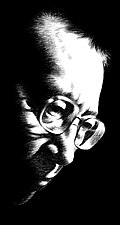
 China
China
Explanation
Liu Xiaobo tried to make it possible for people in China to speak freely. He chose words and peaceful talks instead of violence to share problems. For many years he called on friends and neighbors to build a society where everyone could speak safely. Police arrested him several times, yet he never gave up. The Nobel Peace Prize is given to people who work hard for peace. In 2010 the committee honored his courage and gentle method. His actions are like a classmate who stands up against bullying and gives others hope.
Related Keywords
fundamental human rights
Fundamental human rights are liberties and dignities that every person possesses by birth and that cannot legitimately be taken away by states or laws. Liu Xiaobo focused on freedoms of speech, association, and religion, rooting his claims in both the Chinese Constitution and international covenants. He tested the applicability of universal values under authoritarianism and argued that a vibrant civil society could give concrete form to these rights. The Nobel Committee treated this rights concept as inseparable from peace and placed it at the core of its citation. Liu’s activism strongly influenced the spread of rights discourse across many Asian countries.
non-violence
Non-violence seeks social change without harming opponents; Gandhi and Martin Luther King Jr. are iconic leaders of this approach. Liu Xiaobo studied their ideas and proposed a movement model for the Chinese-speaking world that relies on speech and dialogue. His persuasion of students to leave Tiananmen Square and his prison letters repeating “I have no enemies” are cited as concrete examples. The Nobel Committee explicitly praised his “long and non-violent struggle,” arguing that rejecting violence strengthens the moral legitimacy of the goal. Subsequent civic movements in Hong Kong and Taiwan have often referenced Liu’s non-violent philosophy.
Charter 08
Charter 08 is a political manifesto released in December 2008 and initially signed by about 300 intellectuals and lawyers. The document lists 19 demands—including separation of powers, electoral democracy, and the nationalization of the military—and is modeled on Czechoslovakia’s Charter 77. It spread quickly online, gathering roughly 10,000 supporters within a year, but Chinese authorities detained key sponsors on the day of publication. Liu Xiaobo, as a principal drafter, was arrested and later sentenced to eleven years; the charter served as primary evidence in court. Charter 08 remains a central text in debates on constitutional democracy in China and continues to attract comparative analysis by scholars abroad.
Tiananmen Square protests of 1989
In the spring of 1989 students and citizens across China gathered in Tiananmen Square demanding democratization and an end to corruption. On June 3–4 the army carried out a violent crackdown, causing many deaths and injuries; exact numbers remain undisclosed. Liu Xiaobo had returned from abroad and became one of the “Last Four Gentlemen,” mediating between students and troops. He persuaded a large group of students to leave the square just before the assault, an act some studies credit with reducing casualties. His subsequent arrest and imprisonment marked the starting point of his lifelong human-rights activism.
freedom of expression
Freedom of expression is the right to convey ideas and information without censorship and is regarded as a cornerstone of democratic society. Although the Chinese Constitution contains relevant clauses, broad restrictions are imposed under the banner of national security and social order. Liu Xiaobo’s essays and interviews gained attention for their detailed legal proposals to give this right practical effect. His repeated arrests became case studies of rights violations cited by international organizations. Even after the Nobel award, censorship intensified inside China, and the struggle over expressive freedom remains ongoing.
political prisoner
A political prisoner is someone detained for political beliefs or activities. International human-rights groups classified Liu Xiaobo as a quintessential political prisoner and ran campaigns demanding his immediate release. Procedural flaws in his trial were said to violate international norms against arbitrary detention. The empty chair in 2010 became a powerful visual symbol of the political prisoner’s absence. The Chinese government maintained he was a “criminal,” and the global debate over the concept of political prisoners remains unresolved.
civil society
Civil society refers to the constellation of voluntary organizations and public activities independent of the state and the market. Liu Xiaobo argued that China’s underdeveloped civil society is a structural cause of human-rights repression. Charter 08 served as a catalyst for NGOs and grassroots groups to network, temporarily creating a new public sphere. The government responded with stricter registration and funding rules, yet diverse alternative forums emerged online. These dynamics have revitalized civil-society theory under authoritarianism and become a key topic in comparative studies.
democratization of China
Democratization of China refers to a transition from one-party rule to multi-party competition and electoral democracy. Liu Xiaobo advocated gradual reform rather than radical revolution, proposing a phased introduction of constitutional governance. He argued that strengthening civil society and establishing rule of law are prerequisites for democracy that does not undermine economic growth and social stability. The Nobel award placed Chinese democratization squarely on the global agenda. Scholars continue to debate the practicality of Liu’s roadmap.