2014 Nobel Peace Prize
Reason for Award
for their struggle against the suppression of children and young people and for the right of all children to education
Laureates
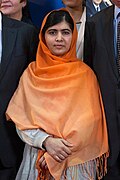
 Pakistan
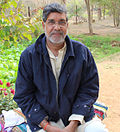
 India
India
Explanation
The Nobel Peace Prize is given to people who work hard for peace in the world. In 2014 it went to 17-year-old Malala and India’s Mr. Satyarthi. They raised their voices so that children can go to school. Malala fights so that girls can study just like boys. Satyarthi rescues children from factories where they are forced to work. Their actions tell the world that no child has to give up on their dreams.
Related Keywords
child labour
Child labour is defined as work that deprives under-18s of healthy development and education. An estimated 160 million children are involved worldwide, with the highest prevalence among the poorest households. Long hours and toxic substances expose them to serious health risks. The ILO classifies forms such as slavery or armed recruitment as ‘worst forms’ and calls for urgent action by governments. Eliminating child labour is central to the SDGs, making rigorous supply-chain oversight by multinational firms essential.
access to education
Access to education means removing economic, geographic and cultural barriers so that everyone can learn. Primary schooling builds literacy and numeracy, shaping future learning and job prospects. Girls, children with disabilities and those in conflict zones often face severe access constraints. Fee abolition, school meals and digital learning materials are common interventions. Expanding education opportunities improves not only income but also health indicators and public safety, according to empirical studies.
girls' education
Girls’ education is crucial for both gender equality and economic development. Higher female schooling levels correlate with lower child marriage rates, reduced fertility and declines in infant mortality. Economically, increased female labour-force participation can boost GDP growth. Traditional norms and safety concerns often depress attendance, prompting scholarships and security measures. Showcasing female role models in the media helps shift social norms and sustains long-term attitudinal change.
Convention on the Rights of the Child
Adopted by the UN General Assembly in 1989, the Convention on the Rights of the Child (CRC) guarantees the rights to survival, development, protection and participation for everyone under 18. States Parties submit periodic reports reviewed by an expert committee. The CRC is the most comprehensive legally binding instrument for children’s rights. Optional protocols strengthen prohibitions on child soldiers and sexual exploitation. The United States remains the only country yet to ratify, but global consensus is otherwise strong.
grass-roots movement
A grass-roots movement is a social movement arising from spontaneous participation within local communities. Unlike top-down campaigns, stakeholders define problems and make decisions themselves. Besides offline meetings, social media now lowers mobilisation costs, enabling rapid scale-up. External supporters can supply funds or expertise, but designs that preserve local autonomy are critical. Grass-roots legitimacy strengthens both the persuasiveness and sustainability of policy advocacy.
multi-stakeholder collaboration
Multi-stakeholder collaboration refers to frameworks in which governments, businesses, civil society and academia work together. It is used to overcome the limits of single-actor solutions to complex problems. Clear governance structures that delineate roles and responsibilities are vital for measurable outcomes. Dialogue platforms that mediate conflicts of interest foster trust. Successful examples span areas from the SDGs to Internet governance.
Sustainable Development Goal 4
SDG 4 aims to ‘ensure inclusive and equitable quality education and promote lifelong learning opportunities for all’ by 2030. Ten targets cover enrolment, literacy, teacher qualification and more. Securing finance and ensuring safe learning environments are key actions. Progress is tracked annually through indicator databases managed by international agencies. The work of Yousafzai and Satyarthi is widely cited as an emblematic example of SDG 4 implementation.
non-violent movement
A non-violent movement seeks social change without resorting to violence. Gandhi and Martin Luther King Jr. are iconic leaders, and tactics include demonstrations, boycotts and civil disobedience. Studies show that non-violent campaigns achieve success more often than violent ones. Moral legitimacy and broad civilian participation make mobilisation easier and raise the cost of repression. The activism of Malala and Satyarthi is firmly rooted in non-violent principles.