2015 Nobel Peace Prize
Reason for Award
for its decisive contribution to the building of a pluralistic democracy in Tunisia in the wake of the 2011 Jasmine Revolution
Laureates
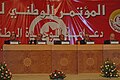
 Tunisia
Explanation
In the country of Tunisia, a big revolution happened in 2011, and people wished for a freer and fairer society. After the revolution, however, many groups argued and sometimes fought. Four organizations—a labor union, a chamber of commerce, a human-rights league, and the bar association—came together and formed the “National Dialogue Quartet.” They gathered everyone to talk, listened to different opinions, and calmed angry groups. Thanks to these meetings, a new constitution was agreed upon and Tunisia could hold peaceful elections. The Nobel Peace Prize was given to let the world know about this important work.
Related Keywords
Jasmine Revolution
The popular uprising in Tunisia from late 2010 to early 2011 is known as the Jasmine Revolution. Sparked by youth anger at unemployment and corruption, protests spread nationwide and toppled President Ben Ali’s 23-year rule. It ignited the broader Arab Spring, triggering regime changes across the Middle East and North Africa. A hallmark was the mobilization of economic and political grievances through social-media networks. Post-revolution Tunisia gained new freedoms but also faced security problems and political fragmentation.
National Dialogue Quartet
Formed in 2013, the Quartet is an alliance of UGTT, UTICA, LTDH, and ONAT. Its goal was to replace political violence and parliamentary gridlock with dialogue and put Tunisia’s democratic transition back on track. Acting as neutral facilitators, it proposed a roadmap that set up a caretaker government and pushed constitutional amendments. Its innovative approach combined local town-hall meetings and media outreach to make citizen voices visible. The Quartet earned broad international trust and became the sole recipient of the 2015 Nobel Peace Prize.
Inclusive democracy
Inclusive democracy refers to a form of governance in which all social groups participate in decision-making, minimizing discrimination and exclusion. In Tunisia, women’s associations, Islamist parties, secular forces, and youth organizations took part in constitutional debates. Inclusiveness boosted the legitimacy of agreements and reduced the risk of renewed conflict. The Quartet institutionalized diverse voices through workshops and public forums. This approach is cited by the UN and EU as best practice for post-conflict transitions.
Social dialogue
Social dialogue is the process by which labor, employers, government, and civil society negotiate policies and working conditions. The Quartet expanded the ILO’s tripartite concept to a four-party model, adding the bar association and a human-rights league. Effective consensus required not only bargaining skills but also trust-building and psychological safety. Dialogue reduced strikes and violent protests, and economic growth began to recover. In the long term, institutionalized consultation mechanisms underpin political stability.
Constituent Assembly
The Constituent Assembly, elected in October 2011, was tasked with drafting and adopting a new constitution. Seat distribution left the Islamist Ennahda party and two major secular parties in near stalemate, causing legislative paralysis. The Quartet’s roadmap imposed deadlines and consultation obligations that broke the deadlock. The resulting 2014 constitution enshrines separation of powers, freedom of belief, and gender equality, and is praised for meeting international human-rights standards. The Assembly’s experience now informs comparative studies of constitution-making elsewhere.
Tunisian General Labour Union (UGTT)
Founded in 1946, the UGTT is a nationwide trade-union federation representing about 500,000 workers. It played a historic role in resisting colonial rule and dictatorship, earning strong social trust. Within the Quartet, it mediated disputes, curbing strikes and fostering dialogue. Its willingness to compromise acted as a catalyst, encouraging concessions from other factions. In recent years UGTT has campaigned for minimum-wage reforms and greater transparency in the public sector.
Tunisian Human Rights League (LTDH)
Established in 1977 as the first human-rights NGO in North Africa, the LTDH has long campaigned for free speech and a ban on torture. With extensive experience in election monitoring and prison visits, it acted as an independent watchdog. Within the Quartet, it published meeting minutes to enhance transparency and gathered citizen complaints to feed into negotiation agendas. Its work contributes to the consolidation of a civic-rights culture in Tunisia.
Arab Spring
The Arab Spring is a catch-all term for the wave of mass protests and regime changes that swept the Arab world from 2010 to 2012. Authoritarian governments in Tunisia, Egypt, Libya, Syria, and others were challenged, with highly varied outcomes. Tunisia is regarded as the only sustained democratization success. The National Dialogue Quartet’s mediation was a key factor in that success. The Arab Spring also draws scholarly attention for its use of digital communication and youth mobilization.