2016 Nobel Peace Prize
Reason for Award
for his resolute efforts to bring the country's more than 50-year-long civil war to an end
Laureates
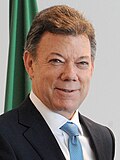
 Colombia
Explanation
In the country of Colombia, a very long fight (civil war) had lasted for more than 50 years. President Santos worked very hard to end the fighting by using dialogue instead of weapons. He sat at the same table with the rebels and signed papers that promised peace. The world recognized how important his effort was and gave him the Nobel Peace Prize. His story teaches us why talking is better than fighting.
Related Keywords
Colombian Civil War
Beginning in the 1960s, the Colombian conflict involved government forces, FARC, ELN, and right-wing paramilitaries. Cold War politics, land inequality, and the drug trade prolonged the violence. About 220,000 people were killed and more than seven million became internally displaced. The war entrenched rural poverty, urban disparity, environmental degradation, and social mistrust. The 2016 final peace accord marked a turning point toward ending a half-century of bloodshed.
FARC
The Fuerzas Armadas Revolucionarias de Colombia (Revolutionary Armed Forces of Colombia) formed in 1964 as a Marxist guerrilla group. It demanded agrarian reform and financed itself through kidnappings and the cocaine trade. At its peak, it fielded around 20,000 fighters and was listed internationally as a terrorist organization. Under the peace accord it completed disarmament and now functions as the legal political party “Comunes.” Delays in reintegration support and security risks for ex-combatant leaders remain challenges.
Peace Negotiations
Peace negotiations are processes in which governments and insurgents seek conflict resolution through dialogue rather than force. In Colombia, Norway and Cuba served as mediators, evolving clandestine contacts into formal talks. Timelines, verification mechanisms, and international support proved essential. Inviting victims to testify directly at the table was considered groundbreaking. The implementation phase is the hardest part, requiring sustained funding and political commitment.
Havana Agreement
The Havana Agreement refers to the final peace accord concluded in August 2016 in Cuba’s capital between the government and FARC. It covers rural reform, political participation, drug eradication, victim reparations, and disarmament/reintegration. The 178-page document was deposited at the UN as a special agreement under international law. After a plebiscite rejection, a revised version passed congress and entered into force. Implementation progress is reported quarterly by the UN and the Kroc Institute.
Victims' Rights
Victims' rights are a key concept in peace processes, encompassing truth-seeking, reparations, and guarantees of non-recurrence. In the Colombian accords, a victim-centered approach allowed more than 6,000 victims to testify. Measures include not only monetary compensation but also land restitution and memorialization. A Truth Commission (CEV) was created to investigate responsibility of both state and guerrillas. Victim participation enhanced the legitimacy and durability of the agreement.
Restorative Justice
Restorative justice is a legal philosophy that seeks to repair harm through dialogue among offenders, victims, and the community. Colombia’s JEP offers alternative sentences, such as community service or reconstruction projects, to those who make full, truthful confessions. The goal is reconciliation and reintegration rather than retribution. Victims meet perpetrators to receive apologies and negotiate restitution plans. The model is closely watched as a bridge between international criminal accountability and domestic peace-building.