2018 Nobel Peace Prize
Reason for Award
for their efforts to end the use of sexual violence as a weapon of war and armed conflict
Laureates
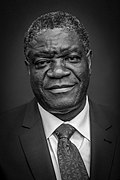
 Congo, Democratic Republic of the

 Iraq
Iraq
Explanation
When a war happens, people can lose their homes or be hurt, but there is also a terrible problem called sexual violence that harms bodies and hearts. Dr. Mukwege works in a hospital in Congo, helping women and children who were attacked. Ms. Murad was kidnapped in Iraq and suffered greatly, but later she bravely told the world, “Stop this.” Together they treat survivors and speak at big meetings like the United Nations to end sexual violence in war. Their huge effort was honored with the Nobel Peace Prize. The award sends a message: everyone should be able to live safely and peacefully.
Related Keywords
conflict-related sexual violence
Refers to rape, sexual slavery, and other violent acts committed systematically or strategically during armed conflict. Beyond harming individuals, it aims to destroy community cohesion and spread fear. The Rome Statute of the ICC classifies it as a war crime and crime against humanity. Survivors face long-term physical, psychological, and social consequences, requiring comprehensive rehabilitation. Stigma and security risks hinder reliable data collection. Establishing accountability and robust survivor-support mechanisms remains a critical international challenge.
gender-based violence
Encompasses all violence rooted in discriminatory gender norms against women and sexual minorities, including domestic abuse, stalking, and sexual exploitation. Conflict-related sexual violence represents one of its most extreme manifestations, magnified by pre-existing structural inequalities. The UN has pledged to eradicate GBV under the SDGs, with multiple agencies developing prevention and response frameworks. Not only legal reform and education but also male engagement and norm change are essential. Ethical data collection must adopt survivor-centred principles.
international humanitarian law
The body of law applicable during armed conflict, centred on the Geneva Conventions and their Additional Protocols. It mandates civilian protection, humane treatment of prisoners, and explicitly prohibits sexual violence. Violations constitute war crimes, enabling individual accountability before tribunals such as the ICC. Mukwege and Murad enhance IHL enforcement through medical documentation and survivor testimony. Current debates involve extending IHL to non-state actors and cyber operations. Compliance with IHL is considered foundational for peacebuilding and human-rights protection.
Panzi Hospital
A specialized hospital founded in 1999 in South Kivu, DRC. Led by Mukwege, it offers integrated surgical, psychological, and legal services to survivors of sexual violence. Performing thousands of operations annually, it also hosts economic-empowerment programs such as agricultural training. In collaboration with WHO and UNFPA, it helped standardize the one-stop-center model internationally. Hospital data serve as key evidence for academic studies and international prosecutions. Considered a best-practice site for healthcare in conflict zones, it is frequently visited by multinational teams.
Yazidi genocide
The mass killing and sexual enslavement of Yazidis in Iraq’s Sinjar region by ISIS in 2014. A UN investigative mission classified it as genocide, noting the combined use of ethnic cleansing and sexual violence. Murad, herself a captive, spurred international action through her testimonies. Ongoing efforts include exhumations, DNA identification, trauma therapy, and support for displaced persons’ return. Perpetrators have been prosecuted by UNITAD and in German courts, providing precedents for extraterritorial application of international law. Cultural preservation and memory-keeping remain critical.
International Criminal Court
A permanent court established in 2002 to prosecute genocide, war crimes, and crimes against humanity. The Rome Statute categorizes sexual violence explicitly as a crime. Medical records and survivor testimonies are pivotal evidence; Mukwege and Murad have acted as cooperative witnesses. Despite budget constraints and political pressure from member states, the ICC remains the primary venue for prosecuting sexual violence in conflict. The latest OTP policy paper mandates a survivor-centred approach and gender analysis.
survivor support
A multifaceted effort addressing medical care, psychological recovery, and social reintegration of sexual-violence survivors. It includes emergency contraception, HIV prophylaxis, trauma counselling, legal representation, and vocational training. Mukwege’s one-stop centre exemplifies this model. Assistance must respect survivors’ dignity and choices. Securing funding and long-term follow-up mechanisms remain challenges. Programs must be culturally sensitive and adapt to local gender norms.
war crime
A serious violation of international humanitarian law that entails individual criminal responsibility. It encompasses attacks on civilians, mistreatment of prisoners, and, importantly, sexual violence such as rape. Commanders and heads of state can be held liable. Successful prosecution hinges on effective evidence collection and preservation. Systematized after WWII’s Nuremberg Trials, war crimes are now chiefly handled by the ICC and ad-hoc tribunals. Early-warning systems are advocated to enhance prevention, deterrence, and victim redress.
reparations and compensation
A legal and moral mechanism to address harm through financial or service-based awards that restore rights. International law can impose obligations on perpetrator states or individuals. In sexual-violence cases, reparations may cover medical costs, education, and housing. Mukwege and Murad advocate survivor-led distribution and the establishment of dedicated funds. Since 2017 the ICC has expanded such programs via its Trust Fund for Victims. Implementation requires sustainable financing and transparent adjudication.
human rights activism
Actions by individuals or organizations aimed at protecting fundamental human rights, including protests, policy advocacy, and educational campaigns. Mukwege and Murad blend medical care, testimony, and diplomacy, exemplifying a multidimensional form of activism. Activists often face threats and violence, making security and mental-health support crucial. Digital media has increased opportunities for global solidarity but also for surveillance and repression. Effective advocacy relies on both data analysis and compelling storytelling.