2019 Nobel Peace Prize
Reason for Award
for his efforts to achieve peace and international cooperation, and in particular for his decisive initiative to resolve the border conflict with neighbouring Eritrea
Laureates
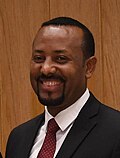
 Ethiopia
Explanation
Prime Minister Abiy of Ethiopia helped his country make peace with its neighbour Eritrea after many years of fighting. For a long time the border was closed and people could not cross. Abiy said, “Let’s talk,” and started friendly meetings. He also took soldiers away from the border so families and friends could meet again. Because of this brave action many people now live more safely. That is why he received the world-famous prize for peace.
Related Keywords
Eritrea–Ethiopia border conflict
A military confrontation between the two countries from 1998 to 2000. Even after the cease-fire, tensions persisted over the final border demarcation, creating a two-decade ‘no-war, no-peace’ stalemate. Casualty estimates exceed 70,000 combined and the conflict severely hampered economic development. The Algiers Agreement established an independent boundary commission, yet its rulings remained unimplemented. Prime Minister Abiy’s full acceptance of the commission’s decision marked a decisive turning point towards ending the conflict.
Joint Declaration of Peace and Friendship (2018)
A five-point agreement signed in Asmara on 9 July 2018. It normalises diplomatic relations, opens the border, restores communications and transport links, guarantees free movement of people and deepens regional cooperation. Although a political declaration, it effectively commits the parties to implement the Algiers Agreement. Within weeks flights and telephone lines resumed, allowing emotional family reunions broadcast worldwide. Economically, plans for Ethiopian use of Eritrean ports began, promising lower logistics costs and expanded trade.
international cooperation
A framework in which states coordinate to realise mutual benefits. The Ethiopia-Eritrea rapprochement enhances security along the Red Sea shipping lanes and aligns with the African Union’s peace and security agenda. Gulf States and the European Union supported the process through mediation assistance and investment, creating a virtuous cycle of multilateral cooperation. Prime Minister Abiy also mediated in Sudan and South Sudan, expanding networks of collaboration across the region. Hence the notion of peace as a ‘regional public good’ is becoming tangible.
democratic reforms
The Abiy administration rapidly opened Ethiopia’s political space: lifting the state of emergency, legalising previously banned media, and granting amnesty to political prisoners. It strengthened the independence of the electoral board and increased female representation in government. Such reforms fostered trust and reduced violence, providing domestic legitimacy for the peace process. Nevertheless, Ethiopia’s multi-ethnic federal structure remains a structural challenge, and the sustainability of reforms requires careful monitoring.
mediation diplomacy
A diplomatic practice of brokering dialogue between conflicting parties to achieve peaceful settlement. Prime Minister Abiy successfully mediated between Sudan’s military council and civilian alliance, facilitating an interim governance accord. Credibility, neutrality and rapid responsiveness are considered keys to mediation success. Ethiopia leverages its geographic advantage of hosting the African Union headquarters to intervene swiftly in regional issues. Drawing on experiences of medium-sized states such as Norway and Finland, Abiy presented an African-led ‘adjacent-state mediation model’ that has gained attention.