1969 Nobel Memorial Prize in Economic Sciences
Reason for Award
for having developed and applied dynamic models for the analysis of economic processes
Laureates
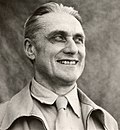
 Norway
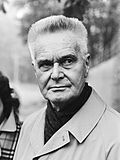
 Netherlands
Explanation
Think of a pocket-money notebook where money comes in and goes out, changing the total over time. Mr. Frisch and Mr. Tinbergen built big ‘math recipes’ to watch how the money of an entire country changes with time. Because their recipes link the past, present, and future, they work like an extra-large pocket-money notebook for a nation. With it, governments can guess how the economy will move when they change taxes or spending. Their work helps people plan smart ideas to make life better for everyone.
Related Keywords
dynamic model
An analytical framework that explicitly incorporates time, expressing how variables evolve from past to future. Essential for studying business cycles and growth processes, it allows evaluation of the timing and persistence of policy interventions.
econometrics
A discipline that merges statistics with economic theory to estimate economic laws and parameters from real data. Employing techniques such as regression and maximum likelihood, it tests the validity of theoretical models through hypothesis testing.
simultaneous equation model
A set of equations in which several endogenous variables are determined jointly. It handles situations where, for instance, demand and supply or income and consumption are decided simultaneously. Identification conditions and estimation methods form a central topic in econometrics.
macroeconomic forecasting
The practice of estimating future values of GDP, unemployment, prices, and other aggregates using models. It supplies baseline information for policy decisions and business strategies, and involves uncertainty analysis and scenario comparisons.
policy simulation
A technique that injects policy shocks—such as fiscal spending or interest-rate changes—into a model to track resulting movements in economic indicators. It quantifies the magnitude and propagation speed of policy effects.
impulse–propagation
Frisch’s business-cycle theory positing that exogenous shocks (impulses) spread and attenuate through internal economic mechanisms (propagation), generating cyclical movements. It is a precursor to modern shock-wave analysis.
time-series analysis
Statistical methods for examining patterns and correlations in data ordered over time. Using autoregressive models, spectral-density analysis, and more, it supports forecasting and causal inference.