1972 Nobel Memorial Prize in Economic Sciences
Reason for Award
for their pioneering contributions to general economic equilibrium theory and welfare theory
Laureates
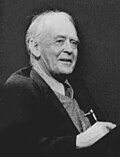
 United Kingdom of Great Britain and Northern Ireland

 United States of America
Explanation
In the world, many people buy and sell different goods. Mr. Hicks and Mr. Arrow invented ways to see whether everyone can trade so that a perfect “balance,” called equilibrium, is reached—no goods are left over and none are missing. They also asked whether that balance makes people truly better off. Their ideas help us figure out what rules and systems make society work well for everyone.
Related Keywords
general equilibrium theory
A theory studying price–quantity vectors that clear all markets simultaneously. Based on Walrasian tâtonnement, it analyzes existence, uniqueness, and stability of points where the excess-demand function is zero. Hicks and Arrow provided the rigorous mathematical structure that underlies modern macroeconomics and international trade.
welfare economics
A field that evaluates how resource allocation affects social well-being. Centered on Pareto efficiency and the welfare theorems, it measures policy effects of taxes, subsidies, and public-good provision. Hicks made welfare changes observable through compensating variation, while Arrow exposed limits of collective decision making through social-choice theory.
Pareto efficiency
A state in which no individual can be made better off without making someone else worse off. It is the benchmark criterion for desirability in welfare economics. Hicks and Arrow showed that competitive equilibrium is Pareto efficient, clarifying the distinction between efficiency and equity.
social choice theory
A framework for analyzing mechanisms that aggregate individual preferences into collective decisions. Arrow’s impossibility theorem proved the difficulty of simultaneously satisfying fairness and logical consistency in voting systems, profoundly influencing political economy and mechanism design.
Hicks–Allen substitution effect
The component of a demand change due solely to relative-price alteration after compensating for real-income effects. It refines the theoretical interpretation of price elasticity and is used in consumer surplus and tax-incidence analysis. Hicks introduced it as a cornerstone of precise welfare measurement.
impossibility theorem
Arrow’s theorem showing that, with three or more alternatives, no social choice rule can satisfy rationality and fairness criteria simultaneously. It explicitly delineates the constraints faced in designing institutions for policy decisions.
Edgeworth box
A diagram for a two-person, two-good exchange economy. Points where indifference curves are tangent represent Pareto-efficient allocations. Hicks popularized its use for visualizing welfare analysis.
comparative statics
A method that studies differences between equilibria before and after a parameter change. Hicks used duality theory to systematize the sensitivity of demand and supply, enabling predictions of policy impacts.
Arrow securities
Promises to pay one unit of value in a specific future state. Arrow used them to model asset markets under uncertainty and formalized the concept of market completeness.
market completeness
A condition where assets exist for every possible future state, allowing efficient risk sharing. Clarified within the Arrow–Debreu framework, it underpins principles for designing financial instruments.