1974 Nobel Memorial Prize in Economic Sciences
Reason for Award
for their pioneering work in the theory of money and economic fluctuations and for their penetrating analysis of the interdependence of economic, social and institutional phenomena
Laureates
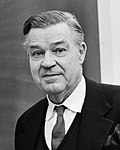
 Sweden
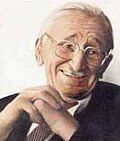
 Austria
Explanation
Money is the tool we use to trade things and services. When there is too much money around, prices rise; when there is too little, jobs disappear. Mr. Myrdal and Mr. Hayek studied very early how changes in the amount of money make the economy boom or slow down. They also showed that factories, schools, families and other parts of society are tightly linked to these economic movements. Their ideas still guide central banks when they change interest rates or decide how much money to issue. They teach us that the economy and society must support each other to keep our everyday life stable.
Related Keywords
Monetary theory
Monetary theory studies how the supply and velocity of money influence price levels and output. It ranges from David Hume’s quantity theory to Friedman’s monetarism. Myrdal emphasized the gap between planned investment and planned saving, showing that money is a driving force behind economic fluctuations rather than a neutral veil. Hayek analyzed how divergences between the natural and the market interest rate distort the capital structure, linking monetary factors with real variables. Modern central-bank policies on inflation targeting and financial stability are built on these developments in monetary theory.
Business cycle
The business cycle refers to the recurring pattern of economic expansion and contraction. It is measured as deviations from a long-term growth trend and affects employment, prices and output. Myrdal argued that temporal mismatches between planned investment and saving accumulate, creating cyclical peaks and troughs. Hayek’s Austrian business cycle theory posits that credit expansion over-extends the capital-goods sector, with recession as the corrective phase. Both perspectives feed into modern DSGE models and financial-shock analyses used for policy evaluation.
Price mechanism
The price mechanism is the process by which prices are set through the interaction of supply and demand, guiding the allocation of resources. Hayek stated that “prices are signals wrapped up in dispersed knowledge,” enabling individuals to make rational choices without knowing the whole picture. Myrdal noted that institutions and social norms affect the speed and direction of price adjustments, highlighting limits of pure market models. When inflation or price controls distort these signals, misinvestment and shortages may occur, aggravating business cycles. Policymakers therefore strive to create conditions in which market prices convey accurate information while also pursuing social fairness.
Circular cumulative causation
Circular cumulative causation denotes a process in which a change feeds back on itself through other domains and becomes self-reinforcing. Myrdal explained that widening income or regional disparities reduce investment, education and health, accelerating the divergence even further. The concept shifts attention from single shocks to chains of interactions, offering important guidance for social and development policy design. Later research on path dependence and complexity economics analyzes similar self-reinforcing loops as key mechanisms. Effective policy must therefore not only address the initial cause but also design measures that break the feedback cycle.
Dispersed knowledge
Dispersed knowledge is the idea that information in society is spread among individuals and firms, making it impossible for a central planner to know everything. Hayek argued that market prices aggregate this information and coordinate resource allocation. In the digital economy and platform businesses, users’ behavioral data are reflected in prices or advertisements in real time, illustrating this principle. However, if information is biased or withheld, price signals become distorted, underscoring the need for transparency and competition policy. The concept also informs mechanism design theory and research in distributed computing.
Interdependence of economic, social and institutional phenomena
The interdependence of economic, social and institutional phenomena is the view that income, education, law and culture influence one another and cannot be understood in isolation. Myrdal analyzed how racial discrimination and land tenure systems lock poverty in place, exposing realities that simple economic numbers miss. Hayek argued that the rule of law and property-rights institutions are prerequisites for a free market, highlighting how institutions shape economic outcomes. This interdependence strongly influences interdisciplinary work in new institutional economics, political economy and sociology. It implies that sustainable policy must balance economic growth, social justice and institutional trust.