1976 Nobel Memorial Prize in Economic Sciences
Reason for Award
for his achievements in the fields of consumption analysis, monetary history and theory and for his demonstration of the complexity of stabilization policy
Laureates
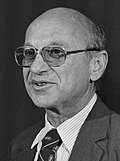
 United States of America
Explanation
When you get pocket money, you might save some instead of spending it all. Mr. Friedman studied how people spend money and explained that they think about their regular income, not one-time gifts. He also showed that when the amount of money in the economy rises or falls, prices change. That means if a country prints too much money, prices go up and life becomes harder. He warned that governments trying to fix the economy can sometimes make things worse because their actions take time to work. These important discoveries earned him the Nobel Prize.
Related Keywords
permanent income hypothesis
Friedman’s consumption theory stating that individuals plan spending based on long-run expected average income (permanent income) rather than short-run fluctuations. It implies limited multiplier effects of temporary tax cuts and shapes evaluation of fiscal and monetary policy. Subsequent research used unit-root tests and lag regressions to examine consumption smoothing and identify liquidity constraints. The hypothesis encouraged explicit expectation terms in consumption equations and became foundational in dynamic general equilibrium modeling.
monetarism
A school of thought emphasizing that changes in the money supply are the primary drivers of prices and real activity; Friedman provided its theoretical and empirical foundation. It claims inflation is always a monetary phenomenon and highlights central-bank control of money supply. Simple, predictable rules—such as the k-percent rule—are deemed superior to discretionary policy for stabilizing the economy. Monetarism influenced policy shifts during the 1970s stagflation, fostering debates on inflation targeting and central-bank independence, and it underpins much of New Classical macroeconomics.
natural rate of unemployment
The long-run equilibrium unemployment rate consistent with stable inflation, introduced by Friedman in 1968. Determined by labor-market frictions and information costs, it cannot be permanently reduced by monetary policy. Short-run deviations are possible through unexpected inflation, but the rate reverts, leaving only higher inflation behind. It provided the theoretical explanation of stagflation and is embedded in NAIRU frameworks and DSGE labor-market models. The concept underscores the importance of policy credibility and inflation-expectation management.
adaptive expectations
A behavioral assumption that agents form future inflation expectations by extrapolating from past inflation. Friedman used it to augment the Phillips curve, explaining how unexpected inflation temporarily lowers real wages. Though later supplanted by rational expectations after the Lucas critique, adaptive expectations remain useful in short-run analyses with price and wage stickiness. The mechanism illustrates gradual error correction and interacts with policy lags to produce business cycles. It also serves as a prototype in behavioral economics and learning algorithms.
Phillips curve
An empirical inverse relationship between unemployment and wage (later price) inflation. By adding expected inflation, Friedman argued the trade-off holds only in the short run, disappearing in the long run. This implied attempts to push unemployment below its natural rate would cause accelerating inflation. The 1970s stagflation supported this view and spurred incorporation of expectations into macro models. Modern New-Keynesian frameworks use an expectations-augmented New Phillips curve with both inflation gaps and forward-looking terms.
quantity theory of money
The classical relation MV = PY that ties the product of money supply (M) and velocity (V) to nominal income. Friedman provided empirical evidence of long-run stability in V, arguing that controlling M is the most effective way to curb inflation. Using 1950s-60s regressions, he estimated a stable money-demand function of interest rates and income. When financial innovation later altered velocity, the effectiveness of money-targeting was re-examined. The quantity theory remains a simple but powerful framework for the long-run determinants of inflation.
money supply
The stock of currency and deposits, adjustable by a central bank through open-market operations and reserve requirements. Friedman empirically showed that money-supply growth predicts real output and inflation. In monetarist policy, a constant growth rate (the k-percent rule) is recommended to avoid excessive cyclical volatility. Money-targeting was adopted in the 1980s in the US and Germany, later giving way to inflation targeting amid ongoing debate. Statistical measurement and definitional issues of the money supply remain central to monetary research.
policy lags
The time delays before a stabilization measure affects the economy, divided into recognition, implementation, and impact lags. Friedman argued that uncertain lags can amplify fluctuations, limiting the effectiveness of discretionary policy. Time-series simulations show out-of-phase interventions destabilize output, supporting rule-based approaches. Modern DSGE models retain policy lags as crucial in analyzing zero-lower-bound episodes and forward guidance effectiveness.
monetary causes of the Great Depression
In "A Monetary History" Friedman and Schwartz argued that bank panics and a sharp contraction of the money supply in the 1930s caused the severe GDP decline. They concluded that the failure of monetary authorities to act as lender of last resort prolonged deflation. This view challenged Keynesian explanations focusing on aggregate-demand shortfalls. Later work by Bernanke and others confirmed the importance of credit-contraction channels, influencing crisis-management policies. Post-2008 quantitative easing reflects lessons drawn from this historical analysis.
k-percent rule
A simple monetary policy rule proposed by Friedman calling for the money supply to grow at a constant annual rate k%. Assuming stable money demand and output growth, it aims to contain inflation and dampen cycles. The rule avoids unreliable forecasts and policy lags while limiting central-bank discretion. Although velocity shifts and financial innovation complicate practical application, the idea inspired later rule-based frameworks such as the Taylor rule. It remains central in debates on credibility and predictability of monetary policy.