1979 Nobel Memorial Prize in Economic Sciences
Reason for Award
for their pioneering research into economic development with particular consideration of the problems of developing countries
Laureates
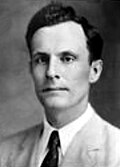
 United States of America

 United Kingdom of Great Britain and Northern Ireland,
  Saint Lucia
Explanation
There are still many poor countries in the world. Mr. Schultz and Mr. Lewis studied how these countries can become richer. Mr. Schultz showed that spending money on farming and schooling is very important. Mr. Lewis explained that when people move from farms to cities and work in factories, the whole economy can grow. Their ideas still help governments make growth plans today.
Related Keywords
economic development
Economic development refers to the long-term rise in production, income, and living standards in a country or region. It encompasses social improvements such as education, health, and infrastructure, not just GDP growth. Development economics seeks to identify the mechanisms and policies that drive this process through theory and empirical work. Schultz and Lewis demonstrated that agricultural reform, industrialization, and human-capital investment accelerate development. Their insights still shape the strategies of aid agencies and national governments.
developing countries
Developing countries are nations whose per-capita income and industrial base are lower than those of advanced economies. Their economies are often agriculture-centered and under-invested in infrastructure and education. High population growth combined with unemployment or informal labour is a frequent challenge. Schultz and Lewis offered roadmaps for these countries to raise agricultural productivity while reallocating labour to industry. Contemporary agendas such as climate action and inclusive growth must still account for the specific conditions of developing countries.
human capital
Human capital represents the stock of knowledge, skills, and health embodied in workers. Schultz statistically measured rates of return to education, showing that investment in people can yield returns comparable to those of physical capital. Human capital is a key driver of innovation and productivity growth and explains differences in income levels across countries. Policies such as compulsory schooling and preventive healthcare foster human-capital formation. Even in the digital era, foundational education and health remain core policy concerns.
dual-sector model
Lewis’s dual-sector model divides the economy into a traditional rural sector and a modern urban industrial sector, allowing low-wage agricultural labour to migrate to higher-productivity industry. Rural “surplus labour” keeps industrial wages constant, and profits are reinvested to accumulate capital. When capital grows sufficiently, the “Lewis turning point” is reached and wages start to rise as labour becomes scarce. The model has been widely cited to explain the rapid industrialization of China and other East Asian economies. Critics note that migration costs and urban informal sectors are often under-represented.
agricultural economics
Agricultural economics studies farm production, land use, price formation, and policy analysis. Schultz coined the phrase “efficient but poor” to describe farmers who behave rationally yet remain impoverished. He empirically demonstrated how price controls and weak infrastructure distort investment incentives. Methods from agricultural economics are employed to assess the economic impact of the Green Revolution and crop improvement. The field is gaining renewed importance in debates on climate change and food security.
structural transformation
Structural transformation is the long-term shift of economic activity from agriculture to industry and services, altering employment and income composition. Lewis’s model is a classic formalization of this process. As transformation proceeds, urbanization rises and household consumption patterns and skill demand evolve. Policymakers need to facilitate the transition through infrastructure investment and skills training. Recently, service-led structural change and green transformation have attracted growing attention.