1988 Nobel Memorial Prize in Economic Sciences
Reason for Award
for his pioneering contributions to the theory of markets and efficient utilization of resources
Laureates
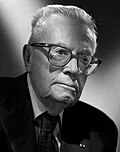
 France
Explanation
When you buy candy at a shop, you want to get what you like without wasting your money. Economist Maurice Allais studied the rules that help everyone trade goods and services smoothly. He showed that if prices are set correctly, both shops and customers benefit, so the whole society is better off. He also thought about how to share important resources like electricity or water so they never run out. Thanks to his ideas, we know how to use limited resources wisely, which helps when designing towns and making national rules. That is why Mr. Allais received a Nobel Prize.
Related Keywords
general equilibrium theory
General equilibrium theory mathematically analyzes the conditions under which all markets for goods and services clear simultaneously. It examines whether a price vector exists that equates supply and demand in every market and whether that equilibrium is stable. Walras initiated the idea and Arrow-Debreu supplied a rigorous proof; Allais extended the framework by incorporating dynamics and public goods. The theory paved the way for computable general equilibrium (CGE) models used to simulate how policy interventions affect overall efficiency. Even today it underpins studies of international trade and environmental policy evaluation.
Pareto efficiency
Pareto efficiency describes a situation where any attempt to make someone better off necessarily makes someone else worse off. It serves as a central criterion for judging whether social resources are being used to their fullest potential. Allais identified the precise conditions under which market equilibrium is Pareto-efficient and studied exceptions when the public sector is involved. Efficiency and equity are separate concepts; a Pareto-efficient allocation can still entail large income disparities, so complementary policy debate is essential. The concept influences many applied areas, including environmental regulation, health-care design, and utility pricing.
Allais Paradox
The Allais Paradox is an experimental finding showing that people violate the independence axiom of expected utility theory when choosing between lotteries. Specifically, subjects display inconsistent risk attitudes toward pairs of choices that differ by the same probability shift. The paradox called into question the assumption of perfect rationality embedded in traditional economic models. It stimulated the development of new behavioral models such as prospect theory and rank-dependent utility. Modern applications in insurance design and financial risk management still draw on Allais’ insights.
resource allocation
Resource allocation refers to the process by which society decides how scarce inputs like labor, capital, and natural resources are assigned to different industries and uses. An efficient allocation seeks to maximize total surplus and avoid waste or opportunity loss. Maurice Allais mathematically demonstrated that when the price mechanism works properly, resources are automatically allocated optimally. He also showed that in the presence of externalities or public goods, markets alone may fail, necessitating taxes or regulations to restore efficiency. His analysis underlies policy in diverse fields such as energy, urban planning, and environmental protection.
marginal cost pricing
Marginal cost pricing sets the price of a good equal to the minimal additional cost of producing one more unit. While price equals marginal cost automatically in perfect competition, it does not hold under monopoly or natural monopoly. Allais showed that even in natural monopolies, social surplus is maximized when prices equal marginal cost and proposed two-part tariffs to cover the resulting deficit. This idea became the theoretical backbone of pricing in transportation, communications, and energy and evolved into the Boiteux-Ramsey pricing rule. It remains a key guideline in designing railway fares, water charges, and electricity tariffs.