1989 Nobel Memorial Prize in Economic Sciences
Reason for Award
for his clarification of the probability theory foundations of econometrics and his analyses of simultaneous economic structures
Laureates
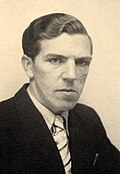
 Norway
Explanation
Mr. Haavelmo made new rules that help the science called “econometrics,” which uses numbers to predict the future of the economy and test government policies. Just like a coin toss can land heads or tails by chance, economic numbers have random changes you can’t fully control. He showed that if we ignore this chance element, our answers will be wrong, so we must put probability into our math. He also invented a way to study things that affect each other at the same time, like prices and wages. Thanks to his ideas, economists can examine complicated links in the economy more accurately.
Related Keywords
Econometrics
Econometrics combines economic theory, mathematics, and statistics to test economic relationships quantitatively. Using tools like regression and time-series analysis, it estimates price elasticities, policy impacts, and much more. Haavelmo’s probabilistic approach elevated econometrics to an observational counterpart of laboratory science. Today it extends to micro-data, big data, and even integrates with machine learning. It remains indispensable for causal inference and evidence-based policy design.
Probability theory
Probability theory is the mathematics of randomness, quantifying uncertainty via probability spaces and distributions. Haavelmo rigorously based parameter estimation in economic models on probability theory, explicitly modeling disturbance behavior. This foundation clarifies population versus sample concepts and enables derivation of consistency and asymptotic distributions of estimators. Modern Bayesian econometrics and many machine-learning algorithms rely on the same probabilistic framework. Probability theory is thus essential for understanding decision-making under uncertainty.
Simultaneous equation model
A simultaneous equation model describes economic systems where several endogenous variables, like demand and supply, are determined together. Because of endogeneity, ordinary least squares is biased, and without identification conditions the parameters cannot be recovered. Haavelmo used probability theory to show how maximum-likelihood and instrumental-variables methods can consistently estimate such systems. The framework underlies modern macroeconomic models and structural VAR analysis. It is indispensable for tracing the transmission of policy shocks.
Consistent estimator
When sample size grows, an estimator is said to be consistent if it converges in probability to the true parameter. Haavelmo highlighted cases where OLS lacks consistency due to simultaneity bias, demonstrating the need for alternative estimators. Two-Stage Least Squares and Limited-Information Maximum Likelihood are classic methods that yield consistent estimators. Consistency serves as a fundamental criterion for assessing whether results would remain stable with more data. Even in modern GMM or machine-learning settings, consistency is a prerequisite for rigorous theoretical validation.
Econometric identification
Identification determines whether a model’s parameters can be uniquely inferred from the data. Haavelmo formalized this by introducing a rank condition on the structural matrix. Without sufficient identification, no estimator can reveal the true parameter values, leaving policy interpretations ambiguous. Modern empirical work relies on tests of instrument validity and over-identification as practical checks. Identification is thus the theoretical bedrock upon which credible causal inference rests.