1998 Nobel Memorial Prize in Economic Sciences
Reason for Award
for his contributions to welfare economics, in particular his research on the theory of inequality of income distribution, poverty, and famine
Laureates
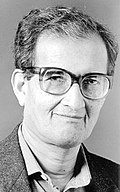
 India
India
Explanation
Economics asks whether money and food reach everyone fairly. Amartya Sen studied why some people have little money or not enough food. He noticed that looking only at national averages hides the real troubles of individuals. For example, even if the class average on a test is high, one friend might still be struggling. Sen’s research helps us find people in need sooner and think of better ways to help them.
Related Keywords
Welfare Economics
Welfare economics studies how the allocation of resources affects the well-being of society. It sets normative criteria for public policy using indicators such as utility, income and opportunity. Sen introduced the informational basis perspective, showing that the type of information used (utility, goods, freedoms, etc.) crucially shapes conclusions. This allowed economists to analyse inequality problems that cannot be handled by utilitarianism alone. Findings in welfare economics inform the design of taxation, social security and international aid schemes.
Capability Approach
The Capability Approach centers welfare assessment on what people are effectively able to do and to be. It focuses on the set of achievable functionings rather than income or subjective satisfaction. Proposed by Sen and later developed by scholars like Nussbaum, it entered political philosophy as well. It underpins the UNDP’s Human Development Index and many national welfare policies. The framework is powerful for analysing multidimensional poverty and gender inequality.
Entitlement Theory
Entitlement theory views an individual’s access to goods as a bundle of legal and economic rights. Sen located the root of famines in the collapse of these bundles, preventing people from acquiring food. This perspective explains famines that occur despite adequate aggregate food supply. It points to the importance of price stabilization, employment programs and food stamps in policy design. The concept is now widely used in disaster economics and development studies.
Poverty Index
A poverty index quantifies the extent and distribution of poverty. Simple headcounts cannot capture depth or inequality among the poor. The Sen Index and Foster–Greer–Thorbecke measures incorporate poverty gaps and distributional concerns. They are used in SDG monitoring and in evaluating national poverty-reduction programs. Choosing an appropriate index greatly affects resource allocation and policy priorities.
Social Choice Theory
Social choice theory studies methods of aggregating individual preferences into collective decisions. Arrow’s impossibility theorem shows that no perfect aggregation rule satisfies several intuitive conditions simultaneously. Sen introduced the Liberal Paradox, quantifying the trade-off between efficiency and basic individual rights. The theory is applied to voting systems, public project ranking and constitutional design. It forms a crucial bridge between economics and political philosophy.
Human Development Index
The Human Development Index (HDI) combines longevity, education and income to rate a country’s level of development. Introduced by UNDP in 1990, it operationalised the ideas of the capability approach. By indexing these dimensions, the HDI shifted policy focus beyond economic growth to health and education. It is published annually and helps countries track their progress and challenges. Spin-off measures include the Gender Inequality Index and the Multidimensional Poverty Index.