2000 Nobel Memorial Prize in Economic Sciences
Reason for Award
for the development of theoretical frameworks and statistical methods that enable the micro-econometric analysis of individual and household consumption behaviour
Laureates

 United States of America
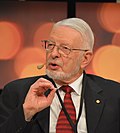
United States of America
Explanation
People make many choices every day—like whether to work or rest, or whether to take the bus or drive a car. Mr. Heckman and Mr. McFadden invented ways to use numbers to find out why people choose one thing instead of another. For example, their ideas let us use computers to predict how family shopping changes when pocket-money changes. Thanks to their work, governments and cities can design rules and services that make everyday life better.
Related Keywords
microeconometrics
An interdisciplinary field that employs data on individuals, households, or firms to statistically test economic hypotheses. Its datasets often involve discrete outcomes, censored observations, and panel structures, demanding sophisticated estimation techniques.
selection bias
A distortion arising when observed data do not constitute a random sample from the population—wage data observed only for employed persons are a classic example—leading to biased parameter estimates and flawed causal inference.
Heckman correction
A two-step procedure that corrects selection bias: estimate participation probability with a Probit model, compute the inverse Mills ratio, and include it in the main regression to account for error correlation.
discrete choice model
A probabilistic framework describing how individuals select one alternative from a finite set. Widely applied to transport mode choice, product demand analysis, residential location, and more.
conditional logit model
An extension of the multinomial logit derived by McFadden that incorporates alternative-specific attributes (price, travel time) as explanatory variables. Possesses the IIA property and is computationally convenient.
self-selection
A situation where inclusion in the sample is determined by the subjects themselves, as with educational attainment or programme participation, complicating estimation of causal effects.
panel data
Data that follow the same observational units over multiple periods. Enable control for individual fixed effects and analysis of dynamic behaviour but often entail heavy computational demands.