2006 Nobel Memorial Prize in Economic Sciences
Reason for Award
for his analysis of intertemporal tradeoffs in macroeconomic policy
Laureates
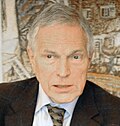
 United States of America
Explanation
The rise in prices is called inflation, and the share of people who want a job but cannot get one is the unemployment rate. Long ago many believed that allowing prices to rise a little would always create more jobs. Mr. Phelps noticed that people form expectations about future prices and act on them. If everyone thinks “prices will rise soon,” their behavior can actually make prices rise even faster. This means the link between inflation and unemployment is not simple. His work shows that a policy that looks good today can cause higher inflation and problems later on.
Related Keywords
Phillips curve
The Phillips curve depicts the observed inverse relation between inflation and unemployment first documented by A. W. Phillips in 1958. During the 1960s policymakers viewed it as a menu for trading higher inflation for lower joblessness, but the stagflation of the 1970s exposed its limits. Phelps introduced expectations and showed the curve becomes vertical in the long run. Modern economics distinguishes a short-run and long-run curve accordingly. Empirical work reveals that the way inflation expectations are measured strongly affects the estimated curve.
Inflation expectations
Inflation expectations are households’ and firms’ subjective forecasts of future price growth. In Phelps’s model they add one-for-one to actual inflation, making the expectation-formation process crucial for policy outcomes. Survey data and market-based measures such as breakeven inflation are used to gauge them. When a central bank builds credibility, expectations remain anchored, allowing low-cost disinflations. If they become unanchored, wage- and price-setting can spiral, entrenching high inflation.
Natural rate of unemployment
The natural rate of unemployment is the jobless rate at which the labor market is in equilibrium and inflation is stable. It is determined by structural factors such as institutions, matching efficiency, and efficiency wages. Policymakers can push unemployment below it temporarily, but expectations adjust and only inflation accelerates. The concept appears as the NAIRU, estimated via filters or structural models. The natural rate is time-varying, shifting with technological change and labor-market reforms.
Expectations-augmented Phillips curve
Proposed independently by Phelps and Milton Friedman, the expectations-augmented Phillips curve posits that inflation depends on expected inflation plus a term proportional to the gap between actual and natural unemployment: π=πᵉ+β(u*−u). In the long run u converges to u*, making the curve vertical. With rational expectations, systematic policy loses real effects and only unanticipated shocks create a short-run trade-off. The relation is now embedded in neoclassical and New-Keynesian DSGE models. Recent work adds nonlinear and sticky expectation dynamics.
Intertemporal trade-off
The intertemporal trade-off refers to choices that weigh present against future economic outcomes. Stimulating demand today can raise future inflation expectations, illustrating that macro policy carries time-spanning costs and benefits. Phelps unified the analysis of unemployment-inflation and consumption-savings trade-offs under this lens. The golden rule of capital accumulation and the time-consistency problem are concrete instances. Discount rates of households and firms and the credibility of governments shape the nature of the trade-off.
Efficiency wage theory
Efficiency wage theory posits that firms pay wages above market-clearing levels to boost morale, reduce turnover, or raise worker productivity. Such higher wages can improve compliance and effort, offsetting their cost. Phelps incorporated the idea into macro models to explain why a positive natural rate of unemployment can persist. The theory reflects real-world settings with imperfect information and monitoring costs. Empirical work examines wage-turnover and wage-productivity correlations to test the hypothesis.
Capital formation
Capital formation encompasses investment in physical assets like machinery and infrastructure as well as human and intangible capital such as education and R&D. Phelps derived the golden-rule condition for intergenerationally fair consumption and showed that both under- and over-accumulation pose problems. In cases of excess capital, lowering the savings rate can improve welfare for all generations—dynamic inefficiency. Human capital accelerates technology adoption and boosts growth. Education policies and tax regimes strongly influence the pace of capital formation.
Monetary policy rules
Monetary policy rules are guiding formulas for how central banks adjust interest rates. The Taylor rule, linking rates to inflation and the output gap, is a prime example and aligns with Phelps’s emphasis on managing expectations. Rule-based conduct enhances transparency and predictability, anchoring expectations. Theoretically it mitigates time-consistency problems and reduces inflation bias. However, rigid rules may hinder flexible responses to financial shocks, so the optimal mix of rules and discretion remains debated.