2019 Nobel Memorial Prize in Economic Sciences
Reason for Award
for their experimental approach to alleviating global poverty
Laureates
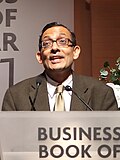
 United States of America
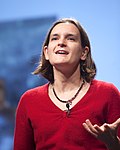
 France

United States of America
Explanation
Around the world many people lack enough money, food, or a chance to go to school. Mr. Banerjee, Ms. Duflo, and Mr. Kremer wanted to learn how to help them. They divided real schools and villages by random chance and tried different ideas, like giving out textbooks or free medicine. By fairly comparing the groups, they could see which idea worked best. These "lottery" experiments showed ways that truly improve children’s learning and health. Their work helps donations and aid money do the most good.
Related Keywords
randomized controlled trial (RCT)
An experimental method in which participants are randomly assigned to treatment and control groups, neutralizing pre-existing differences and enabling causal inference. Long used in clinical medicine, RCTs were transplanted into real-world settings—schools, villages, firms—by development economists. They offer high internal validity and are directly actionable for policy, yet require attention to external validity and spillovers. The laureates pioneered RCTs across education, health, and finance, while refining cluster-robust statistics and instrumental-variable corrections for partial compliance. Today RCTs combine with machine learning and are scaled to government-wide pilots.
development economics
A branch of economics that studies growth, poverty, and inequality in low-income nations. Once dominated by macro aggregates and observational data, it now relies heavily on micro-level experiments and behavioral insights. The laureates’ work measured returns to schooling, price elasticity of preventive health, credit constraints, and more, linking theory and empirics. Their evidence allows policymakers to channel scarce resources into proven interventions and inspired the creation of evidence hubs such as J-PAL and IPA, reshaping development practice worldwide.
education intervention
Policy actions aimed at improving learning outcomes or enrollment: textbook provision, free meals, smaller classes, remedial tutoring, and more. RCT comparisons show that tailoring instruction to lagging students—e.g., India’s teaching-at-the-right-level programs—yields high cost-effectiveness, whereas pure resource inputs often have limited impact. Because education interventions build human capital, they affect lifetime earnings and intergenerational mobility. The laureates’ evidence underpins large-scale roll-outs and informs global education policy.
deworming
A public-health program distributing anti-parasitic pills to children. An RCT in Kenya showed that free provision sharply raised uptake, reduced absenteeism, and increased future earnings. Positive spillovers lowered infection rates in neighboring schools, making the social cost-effectiveness extremely high. These findings influenced WHO guidelines, and today over 800 million schoolchildren receive free deworming treatment.
microcredit
Small, collateral-free loans offered to the poor. Once hailed as a panacea for entrepreneurship, RCTs by the laureates (e.g., Hyderabad) found modest short-run effects on business investment and little impact on consumption or education. The evidence tempered earlier optimism and shifted focus toward complementary services—training, market access, insurance—alongside credit.
behavioral economics
A field that incorporates psychological biases into economic decision making. Present bias and bounded rationality explain delayed investment and low savings among the poor. The time-limited fertilizer discount experiment showed that short-run incentives outperform permanent subsidies, underscoring the need to embed behavioral insights into policy design.
external validity and spillover effects
The challenge of applying RCT findings to new settings or scaled-up policies. The laureates used saturation designs and neighboring-group analysis to quantify spillovers, avoiding overestimation of impacts. Coupling experiments with general-equilibrium models, they estimated price shifts and market congestion, creating a realistic pathway from pilot to nationwide adoption.
poverty alleviation policy
Government and NGO actions aimed at raising incomes, improving health, or widening educational access. The laureates’ evidence emphasized cost-effectiveness and monitoring, accelerating the shift toward evidence-based policy making (EBPM). An estimated 400 million people now benefit from programs whose efficacy was first verified through RCTs.