1902 Nobel Peace Prize(2)
Reason for Award
for his eminently practical administration of the Inter-Parliamentary Union
Laureates
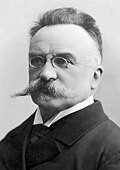
 Switzerland
Explanation
Charles Gobat organised the Inter-Parliamentary Union where lawmakers from many countries could talk together. From Bern, he sent letters urging them to choose discussion over fighting. Because of him, parliamentarians learned about each other’s laws and views, helping to stop conflicts. His leadership was like a team captain in baseball whom everyone trusts. For this practical work, Gobat received the Nobel Peace Prize.
Related Keywords
Inter-Parliamentary Union
Founded in 1889 by Frédéric Passy and William Cremer, the Inter-Parliamentary Union (IPU) allows legislators to participate in a personal capacity and adopt resolutions on peace and international cooperation. The organisation operates through a secretariat, a council and an annual assembly, and now has a cooperation agreement with the UN General Assembly. In the early 20th century it addressed topics such as international arbitration and transparency in colonial policy. Today the IPU runs election support and parliamentary reform programs, contributing to the promotion of democracy.
Parliamentary diplomacy
Parliamentary diplomacy refers to cross-border dialogue conducted by legislators rather than foreign ministries. Although MPs lack formal treaty-making power, they can exchange views flexibly through informal channels. The IPU institutionalised this method and fostered trust among lawmakers. During the Cold War it became a rare venue where both blocs kept talking. Today it is employed in bipartisan issues such as climate change and human rights.
Treaty-making
Treaty-making is the process of forming legally binding agreements between sovereign states. Traditionally monopolised by diplomatic corps, the IPU enabled legislators to discuss draft treaty texts and expedite national ratification. In Gobat’s era, drafts on international arbitration and naval arms limitation were debated. Early parliamentary involvement helped prevent deadlocks caused by later ratification refusals. This logic aligns with the present roles of bodies like the European Parliament and the U.S. Senate.
International Court of Arbitration
An international court of arbitration is a permanent body that settles disputes between states or companies through judicial procedures. The Permanent Court of Arbitration (PCA), founded in The Hague in 1899, is considered the first such institution. IPU legislators promoted the court’s establishment in their parliaments and secured budgetary contributions. Judges are listed by national governments and parties choose arbitrators from that roster. The mechanism is still used today, as in the South China Sea arbitration.
Hague Peace Conferences
The Hague Peace Conferences of 1899 and 1907 gathered states in The Hague, Netherlands, to discuss the laws of war and arbitration mechanisms. The IPU organised parliamentary delegations and prepared agenda memoranda in advance. Gobat contributed procedural expertise and legal knowledge, reconciling views of smaller states. The conferences produced the Hague Conventions and laid groundwork for the International Court of Justice. Their framework is regarded as the starting point of modern international humanitarian law.
Limitations of armament
Limitations of armament set quantitative or qualitative ceilings on military capabilities. Facing late-19th-century naval races, the IPU proposed tonnage caps and gun-calibre limits. Through parliamentary diplomacy it made visible the fiscal and social opportunity costs of armament. Partial realisation came with the 1922 Washington Naval Treaty. The concept continues in current debates, such as the proposed Fissile Material Cut-Off Treaty.
Swiss neutrality
Swiss neutrality, recognised in the 1815 Congress of Vienna, is a permanent policy of non-alignment. It enabled Switzerland to host numerous international secretariats, making Bern and Geneva hubs of conference diplomacy. Both Gobat’s IPU and Ducommun’s IPB benefited from this neutral setting. Neutrality offers a perception of safety by lacking foreign military bases, encouraging participation from rival states. Switzerland still plays a key role in multilateral negotiations and peace mediation today.