1907 Nobel Peace Prize(1)
Reason for Award
for his leadership as President of the Lombardy League for Peace and Arbitration
Laureates
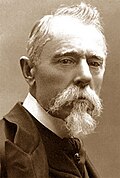
 Kingdom of Italy
Explanation
Mr. Moneta was a person who tried hard to solve problems by talking instead of fighting. In Italy he wrote in newspapers and told people, “Peace is more important than war.” He also led a group that helped countries settle quarrels through arbitration. Thanks to his work, France and Italy became friendlier to each other. That is why he received the Nobel Peace Prize.
Related Keywords
peace movement
The peace movement is a collective term for civic and organizational efforts to oppose war and resolve conflicts non-violently. In late-19th-century Europe, industrialization fueled an arms build-up, yet peace activists built transnational networks, shaping public opinion through congresses and print media. Moneta was a key figure and prioritized information dissemination via newspapers. His strategy can be seen as a precursor to modern NGOs and think tanks. The movement influenced the founding of the League of Nations after World War I and still underpins today’s disarmament talks and nuclear abolition campaigns.
international arbitration
International arbitration entrusts disputes between states to a neutral arbitrator or tribunal whose award is binding. The method proved effective in the 19th century, notably in the Alabama Claims, and gained attention as a peaceful tool. Moneta supported the creation of a permanent arbitral court and lobbied governments to employ it. Arbitration was viewed as more flexible than judicial litigation and less costly than war. It served as a prototype for today’s International Court of Justice and the WTO dispute-settlement system.
Lombardy League for Peace and Arbitration
Founded in Milan in 1890, the Lombardy League for Peace and Arbitration was a regional peace association chaired by Moneta. The league promoted arbitration through lectures, petition drives, and school programs. It joined the International Peace Bureau and sent delegates to its annual congresses. Cooperating with local chambers of commerce and labor unions, it created a multilayered network. Funding came from membership fees and newspaper profits, providing an early model of synergy between media and activism. Its influence crossed Italian borders and inspired similar groups in France and Switzerland.
anti-war journalism
Anti-war journalism reports on the horrors of war and criticizes militarism. In the 19th century, new mass-circulation newspapers reached a broad audience and played a major role in spreading pacifist ideas. Moneta’s Il Secolo covered not only battle news but also analyzed military budgets and diplomatic back-channels. It used photographs and cartoons extensively, appealing to readers’ emotions. This tradition continues in today’s investigative and frontline journalism, exerting public pressure that can alter policy.
universal disarmament
Universal disarmament advocates drastic reduction or elimination of all nations’ armaments to minimize the risk of war. By the late 1800s, the battleship race and large standing armies imposed heavy fiscal and social burdens. Moneta argued that security could be preserved if disarmament were coupled with international arbitration. The issue remained on the agenda at the Hague Conferences and the League of Nations, leading to instruments such as the Washington Naval Treaty of the 1920s. Today the idea endures in efforts like the Treaty on the Prohibition of Nuclear Weapons.
Franco-Italian rapprochement
At the end of the 19th century Italy and France had strained relations due to colonial rivalry and divergent diplomatic alignments. Through citizen exchanges and media dialogue, Moneta promoted deeper mutual understanding between the two nations. Soft-power tools such as student exchanges and joint commemorations created a friendly climate ahead of formal state agreements. The campaign is regarded as an early example of public diplomacy. It temporarily eased military tensions in the Mediterranean and affected the balance among European powers.