1912 Nobel Peace Prize
Reason for Award
for his strong commitment to international arbitration and his draft proposal for an international court
Laureates
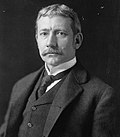
 United States of America
Explanation
Just as a teacher helps children settle quarrels, Elihu Root wanted countries to solve their disputes by talking instead of fighting. He was an American statesman who worked to create a world system that used words rather than weapons. The main idea was international arbitration, a method for letting an impartial group listen to both sides. The place he imagined for this was an international court. Thanks to his efforts, many nations realized the importance of discussion, and he received the Nobel Peace Prize in 1912. His story reminds us that communication is a powerful tool for peace.
Related Keywords
international arbitration
International arbitration is a procedure in which disputing parties, whether states or private actors, submit their case to an impartial third party for a binding or advisory decision. It is perceived as more flexible and faster than a court trial, and the parties may choose their arbitrators. At the end of the nineteenth century the Hague Peace Conferences set up the Permanent Court of Arbitration, and Root sought to use and improve that mechanism. Today arbitration is applied in many areas, from investment and commerce to sports, providing a safety valve for global trade and resource development. The Nobel Committee recognized that this mechanism can serve as an effective substitute for armed confrontation.
proposal for a permanent international court
Root’s draft for an international court was among the earliest texts to call for obligatory jurisdiction over states. He envisioned a standing roster of professional judges and public hearings, combining transparency with expertise. The design became the template for the Permanent Court of International Justice created in 1920. Making the court a permanent body eliminated the need for ad hoc negotiations every time a dispute arose. The same underlying idea can be seen today in the International Court of Justice and the International Criminal Court.
Hague Peace Conferences
The Hague Peace Conferences of 1899 and 1907 played a decisive role in institutionalizing modern international law. They called for the creation of the Permanent Court of Arbitration and produced foundational texts on the laws of war and arms limitation. Root influenced the U.S. delegation to the 1907 meeting and carried its results into inter-American diplomacy. The conferences are regarded as the first systematic attempt to codify disarmament and peaceful dispute settlement. They are therefore closely linked to the ideals honored by the Nobel Peace Prize.
Pan-Americanism
Pan-Americanism is the idea that the countries of the Western Hemisphere should cooperate for mutual understanding and shared prosperity. From the late nineteenth century it was institutionalized through the Inter-American Conferences. In a 1906 tour, Root emphasized equal sovereignty and dialogue, offering a corrective to the interventionist tendencies of the Monroe Doctrine. This trajectory later led to the creation of the Organization of American States, a pioneer of regional collective security. The fostering of harmony between North and South America was a central element in his Nobel Award.
arbitration treaties
An arbitration treaty is an international agreement in which the parties pledge in advance to submit future disputes to a third-party tribunal. Root promoted the format of general arbitration treaties that covered a wide range of issues except the most vital questions of national interest. Making such commitment obligatory was bold for the era, signaling a belief in the supremacy of law. By 1912 the United States had concluded more than thirty such treaties, establishing a baseline for multilateral arbitration. The clauses that accompany modern investment agreements and free-trade pacts still bear his imprint.
international law
International law is the body of rules that governs states and international organizations, covering areas from war and peace to trade and human rights. During the transition from nineteenth-century conciliation to twentieth-century court-centered approaches, Root served as a major catalyst. He advocated the combination of treaties with permanent institutions, providing strong procedures that made international law effective. As a consequence, compliance shifted from a moral obligation to a legal duty. Modern institutions that champion the rule of law, such as the ICJ and the WTO, follow design principles forged in this period.
inter-American understanding
Inter-American understanding refers to the process by which North, Central, and South American states overcome political and cultural divides to deepen cooperation. At the turn of the twentieth century tensions rose because of the Spanish-American War and tariff disputes, yet Root helped rebuild trust through reciprocal visits and public speeches. He addressed audiences in Spanish to demonstrate equality and won favorable local opinion. He also promoted educational and scientific cooperation, proposing student exchanges and museum networks. Such soft-power diplomacy was seen as a second pillar, alongside military restraint, for the maintenance of peace.