1921 Nobel Peace Prize(1)
Reason for Award
for his contribution to the League of Nations
Laureates
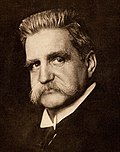
 Sweden
Explanation
Karl Hjalmar Branting was a Swedish politician who dreamed of a world where people solved problems without fighting. After World War I, many wanted a system that would stop another huge war. A new club of nations called the League of Nations was proposed to let countries talk before using force. Branting worked hard to convince Sweden to join this club. He believed that membership would make talking, not shooting, the first choice. Through newspapers and speeches he explained peace in words everyone could understand. His efforts inspired people worldwide and earned him the Nobel Peace Prize. He reminds us how important it is to talk things out.
Related Keywords
League of Nations
The League of Nations was an international organization created in 1919 after World War I. Its primary goal was to prevent war and settle disputes peacefully. Member states pledged to prefer consultation and arbitration over the use of force. The League also tackled social issues such as public health and labor conditions. Although it failed to stop World War II, the lessons learned became the foundation of the United Nations.
collective security
Collective security is a system in which member states jointly protect one another’s safety. If one is attacked, the others cooperate to impose sanctions and deter aggression. Both the League of Nations and the United Nations placed this principle at the core of their charters. By privileging group action over unilateral moves, the system aims to raise the costs of war and maintain peace. Its effectiveness, however, declines when members’ interests diverge.
international arbitration
International arbitration is a method in which an independent third party delivers a binding decision on disputes between states. The parties agree in advance to accept the outcome, thereby avoiding armed force. The Permanent Court of Arbitration, created in 1899, is a leading institution. The League of Nations encouraged arbitration treaties, and many minor disputes were settled peacefully. Enforcement becomes difficult, however, when major powers lack the political will.
Swedish Social Democratic Party
Founded in 1889, the Swedish Social Democratic Party is a labor party committed to building a welfare state and pursuing peaceful diplomacy. It held power for much of the 20th century. Branting, one of its early leaders, established the party’s internationalist orientation. Close cooperation with trade unions enabled comprehensive social-security programs that reduced domestic inequality. The party’s approach became globally known as the “Nordic social-democratic model.”
welfare state
A welfare state is a form of government that provides extensive social security such as education, healthcare, and pensions. Its aim is to reduce poverty and inequality through income redistribution. Nordic countries are classic examples, combining high taxes with generous services. A robust social safety net can dampen social unrest and support both domestic stability and peaceful foreign policy. Yet it also faces challenges, including fiscal strain and population aging.
disarmament
Disarmament is the effort to reduce the size of armed forces and weapon stocks, lowering the risk of war. In the 1920s, naval treaties aimed to restrain arms races. The League set up a Disarmament Commission, though great-power rivalry blocked full success. Still, the negotiation framework informed later UN disarmament forums. The concept remains vital today, especially in nuclear-weapon reduction talks.