1921 Nobel Peace Prize(2)
Reason for Award
for serving as Secretary-General of the Norwegian Nobel Committee and of the Inter-Parliamentary Union
Laureates
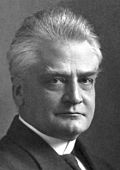
 Norway
Explanation
Christian Lous Lange was a Norwegian scholar who helped create a place where members of parliaments from many countries could talk together. He believed that problems should be solved with words before weapons. Lange organized meetings of these lawmakers and helped them find common ground. He also worked for the Nobel Peace Prize committee, spreading the idea of peace. Because he spent so much time connecting people, he was given the Nobel Peace Prize himself. His work showed the world that talking can solve a lot.
Related Keywords
Inter-Parliamentary Union
The Inter-Parliamentary Union (IPU), founded in 1889, is the world’s oldest international assembly of parliamentarians. Its aim is to prevent conflict and promote democracy through dialogue among legislators. Today it includes more than 170 member states and adopts resolutions on peace and human rights at its annual meetings. Though an NGO, it influences global policy, holding observer status at the UN General Assembly. Lange, as Secretary-General from 1909, professionalized its administration and agenda-setting.
parliamentary diplomacy
Parliamentary diplomacy refers to activities in which legislators, rather than foreign ministries, engage with foreign counterparts to achieve diplomatic goals. It is often informal, allowing flexible exchanges even between adversaries. Since the Cold War, numerous networks, such as parliamentary forums on nuclear non-proliferation, have evolved. Scholars argue that it complements rigid government diplomacy and fosters confidence building. Critics note limits in authoritative power and policy impact.
disarmament
Disarmament seeks to cut weapons and troop levels, lowering war risks. The IPU discussed naval and standing-army reductions early on. Lange introduced data-driven debates, mitigating emotionally charged rhetoric. Modern arms-control talks still rely on transparency of data. One origin of that practice lies in the IPU’s pioneering work.
Norwegian Nobel Committee
The Norwegian Nobel Committee selects Nobel Peace Prize laureates. It consists of five members appointed by Norway’s parliament and operates in Oslo. Lange, as Secretary-General, gathered and analyzed nominee information. He instituted clear evaluation criteria and impartial procedures, enhancing the prize’s credibility. His methods are still reflected in the committee’s work today.
Hague Peace Conferences
The Hague Peace Conferences of 1899 and 1907 sought to codify the laws of war and establish arbitration mechanisms. Alongside state delegates, parliamentarians and jurists participated, laying the groundwork for modern international law. Lange attended as secretary to the parliamentary delegation, informally negotiating arbitration clauses. The resulting Hague Conventions became a cornerstone of later international judicial systems. The IPU subsequently carried forward the “Hague spirit” in its peace agenda.
Permanent Court of Arbitration
The Permanent Court of Arbitration (PCA), founded at the 1899 Hague Conference, offers arbitration procedures to peacefully resolve disputes among states, organizations, or companies. Parties select arbitrators, and the award is binding. Through the IPU, Lange urged wider use of the PCA, sending parliamentary resolutions to governments. Today the PCA handles a variety of cases, from maritime boundaries to investment disputes.