1929 Nobel Peace Prize
Reason for Award
for his crucial role in bringing about the Briand–Kellogg Pact
Laureates
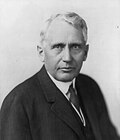
 United States of America
Explanation
In the 1920s the world was still hurting after World War I. An American statesman, Frank Kellogg, wanted countries to promise "no more wars." Working with French foreign minister Aristide Briand, he created the "Kellogg–Briand Pact," a treaty in which many nations agreed not to use war. It was like a classroom promise never to fight. Because of this important peace effort, Mr. Kellogg received the Nobel Peace Prize.
Related Keywords
Kellogg–Briand Pact
The 1928 multilateral treaty in which states formally renounced war as a tool of diplomacy. Initially signed by 15 nations and later joined by more than 60, it had limited enforcement but enormous symbolic value as the first international accord to outlaw aggressive war. It provided a legal foundation cited in the U.N. Charter and the Nuremberg Trials, influencing the modern international legal order. The pact is still referenced in legal scholarship and history classes as a landmark of peace advocacy.
Renunciation of war
The idea that a state gives up the use of armed force to settle international disputes, codified for the first time in the Kellogg–Briand Pact. It later became universal through Article 2(4) of the U.N. Charter, establishing the illegality of aggression. Japan’s Article 9 embodies a similar principle, fueling ongoing domestic and international debates. Today the concept faces challenges such as cyber-operations and unmanned weapons, testing how far "force" should be defined. It remains a key term in balancing pacifism with security policy.
Treaty
A treaty is a formal agreement between states and a principal source of international law. The Kellogg–Briand Pact is a classic multilateral treaty that expanded its reach through ratification and accession. Treaties involve complex procedures such as interpretation, reservations, and termination. Enforcement often relies on sanctions or dispute-settlement clauses, which the pact notably lacked. Treaty studies constitute a core field in international relations and legal scholarship.
American isolationism
A U.S. foreign-policy stance, dominant from the late 19th century to the 1930s, that sought to avoid entanglement in European alliances and wars. The Senate rejected membership in the League of Nations and treated foreign treaties with caution. Kellogg, mindful of isolationist sentiment, framed the pact as a moral declaration, enabling Senate ratification. The U.S. thus shaped international law without incurring military commitments. Although isolationism waned after Pearl Harbor, its ideals still echo in contemporary unilateralist debates.
International law
The body of rules governing states and international organizations, derived from treaties, custom, and general principles. The Kellogg–Briand Pact spurred new customary norms banning war, reshaping jus ad bellum. After World War II it merged with the U.N. Charter and evolved toward criminalizing aggression. Modern international law has expanded into areas such as human rights and the environment while facing enforcement challenges. Compliance affects a state’s credibility and diplomatic leverage.
League of Nations
The first permanent global organization, founded in 1919 after World War I with goals of peace and collective security. Its effectiveness was limited, partly because the U.S. never joined and because it failed to deter aggression. The Kellogg–Briand Pact allowed states outside the League to participate in the legal renunciation of war. Lessons from the League shaped the United Nations’ design, providing templates for institutional structures and multilateral diplomacy. It remains an important case study in international relations scholarship.